
Views: 0 Author: Site Editor Publish Time: 2026-04-28 Origin: Site


When it comes to fire safety, choosing the right type of fire extinguisher is crucial. Different types of fire extinguishers are designed for different classes of fires, and using the wrong extinguisher can make a fire worse, leading to more damage or injury. Two of the most common fire extinguishers found in homes, businesses, and industries are water extinguishers and foam extinguishers. While they may seem similar in their purpose of putting out fires, they function very differently and are suitable for distinct types of fire hazards. In this blog, we will explore the key differences between water and foam extinguishers, their advantages, disadvantages, and which types of fires each is designed to combat.
Water extinguishers are one of the most basic and widely used fire extinguishers available. They work primarily by cooling the burning material and reducing the temperature below the ignition point. Water extinguishers are classified as Class A extinguishers, meaning they are designed specifically for fires involving solid combustibles, such as wood, paper, textiles, and certain plastics.
Water extinguishers function through a simple principle: cooling. Water absorbs heat from the fire and reduces the temperature of the burning material. By lowering the temperature, the fire is extinguished as it can no longer maintain combustion. When water is discharged, it typically comes out in a strong jet that directly targets the fire.
Water works well for fires involving common combustible materials but has significant limitations when it comes to other types of fires, especially flammable liquids and electrical fires.
Cost-Effective: Water extinguishers are generally less expensive than other types of fire extinguishers. They are an economical choice for tackling common fire hazards in residential and commercial settings.
Environmentally Friendly: Water is a natural, non-toxic substance, making it less harmful to the environment compared to other chemicals used in fire extinguishers.
Widely Available: Water extinguishers are widely available and easy to use, making them a go-to solution in areas where solid combustible fires are most likely to occur.
Not for Flammable Liquids: Water extinguishers should never be used on fires involving flammable liquids like gasoline, oils, or paints. Water can cause these liquids to spread, making the fire worse.
Not Safe for Electrical Fires: Water is a conductor of electricity, so using it on electrical fires can cause electrical shock and even electrocution. Water extinguishers are therefore unsuitable for electrical fires unless the electrical supply is turned off.
Limited Effectiveness on Certain Fires: Water can only effectively fight solid fires (Class A). It does not have the versatility to handle other classes of fires, such as those involving gases (Class C) or metals (Class D).
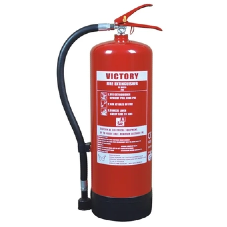
Foam extinguishers are more versatile than water extinguishers, as they can tackle both Class A (solid combustibles) and Class B (flammable liquids) fires. Foam extinguishers create a thick foam blanket that smothers the fire, cooling the burning material and cutting off the oxygen supply. They are particularly effective in situations where the fire involves flammable liquids or oils, which water cannot extinguish.
The foam in foam extinguishers is typically a mixture of water, foam concentrate, and air. When discharged, the foam forms a protective blanket over the burning material, cooling it and cutting off the oxygen. This process not only extinguishes the fire but also prevents the spread of fire and reduces the chance of re-ignition. Foam extinguishers can be used for fires involving liquids like oils, solvents, gasoline, and alcohol.
Foam extinguishers work by forming a barrier that prevents oxygen from reaching the fuel source, and this is particularly effective for liquid fires that cannot be tackled by water.
Versatility: Foam extinguishers are versatile, as they can be used for both Class A and Class B fires. This makes them an ideal choice for environments where both solid materials and flammable liquids are present.
Effective on Flammable Liquids: Foam extinguishers are particularly effective for fires involving flammable liquids, such as oils and solvents, where water would be ineffective or dangerous.
Prevents Re-Ignition: The foam layer not only extinguishes the fire but also helps to prevent re-ignition by forming a barrier that reduces the evaporation of flammable liquid vapors.
More Expensive: Foam extinguishers tend to be more expensive than water extinguishers due to the more complex design and foaming agents used.
Not Ideal for Electrical Fires: Although foam extinguishers are effective on a wide range of fires, they are not recommended for electrical fires unless the equipment is de-energized. In this case, CO2 or dry powder extinguishers would be more appropriate.
Requires Maintenance: Foam extinguishers require more maintenance compared to water extinguishers. The foam concentrate inside the extinguisher needs to be checked and replaced periodically to ensure it functions properly.
Feature | Water Extinguisher | Foam Extinguisher |
Fires Used For | Class A (Solid combustibles like wood, paper, textiles) | Class A (Solid combustibles), Class B (Flammable liquids like oils and gasoline) |
Effectiveness | Effective in cooling and smothering solid fires | Effective on solid and liquid fires, especially flammable liquids |
Suitability for Flammable Liquids | Not suitable for flammable liquid fires | Highly effective for flammable liquid fires (Class B) |
Safety Around Electrical Fires | Not safe for electrical fires | Can be used on electrical fires but not ideal, especially with live equipment |
Cost | Generally cheaper | More expensive than water extinguishers |
Environmental Impact | Environmentally friendly | Environmentally friendly but slightly less so than water extinguishers |
Maintenance | Low maintenance cost | Higher maintenance cost |
Ease of Use | Easy to use, suitable for most people | Slightly more complex, requires more training |
The choice between a water or foam extinguisher largely depends on the environment in which the extinguisher is going to be used and the types of fires that are most likely to occur. Here are some scenarios to guide your decision:
Use a Water Extinguisher if:
You are in an environment where solid combustibles are the primary fire hazard (e.g., paper, wood, fabric).
You need an economical solution for Class A fires.
You are in a location where flammable liquids or electrical equipment are not present.
Use a Foam Extinguisher if:
You are in an environment where flammable liquids (such as oils, solvents, or paints) are likely to be involved in fires.
You need a versatile extinguisher that can handle both Class A and Class B fires.
You are in an environment where liquid fires are a significant risk, such as a kitchen, warehouse, or manufacturing plant.
Both water and foam extinguishers are essential for fire safety, but their applications and effectiveness differ based on the types of fires they are designed to tackle. Water extinguishers are ideal for solid combustibles but are unsuitable for liquid or electrical fires. Foam extinguishers, on the other hand, are versatile and can handle both solid and liquid fires, making them the preferred choice in environments with multiple fire hazards.
At NingBo ZhengXin Fire Fighting Equipment Co., Ltd., we offer a wide range of high-quality fire extinguishers, including water and foam extinguishers, to meet the needs of various industries. If you're unsure which extinguisher is best suited for your business or home, contact us today to learn more about our fire safety solutions.
Q: Can a water extinguisher be used on electrical fires?
A: No, water extinguishers should never be used on electrical fires, as water is a conductor of electricity and can cause electric shock or spread the fire.
Q: Are foam extinguishers safe for use on electrical fires?
A: Foam extinguishers can be used on electrical fires if the electrical equipment is de-energized. For live electrical equipment, it is recommended to use CO2 or dry powder extinguishers.
Q: What type of fire should a water extinguisher be used for?
A: Water extinguishers are suitable for Class A fires, which involve solid combustibles like wood, paper, and textiles.
Q: How often should foam extinguishers be inspected?
A: Foam extinguishers should be inspected regularly, with a professional maintenance check at least once a year to ensure that the foam concentrate is effective.


