
Views: 0 Author: Site Editor Publish Time: 2026-06-19 Origin: Site


Commercial kitchen fires escalate rapidly when high-temperature cooking oils unexpectedly ignite. These sudden infernos directly risk staff safety, cause severe property damage, and force extended operational downtime. Standard equipment simply cannot handle these extreme situations safely or effectively. Strict compliance requires specific solutions. Local fire codes, including NFPA, OSHA, and BS EN3, mandate highly specialized equipment designed precisely for intense grease fires. Failing to meet these standards leaves your business vulnerable to catastrophic physical and financial losses.
This comprehensive guide provides facility managers and restaurant owners an evidence-based framework. You will learn how to properly evaluate, select, and seamlessly implement the correct units for your workspace. We will cover everything from core suppression mechanics to critical regulatory standards to protect your commercial kitchen thoroughly.
Standard ABC dry chemical or water-based units are ineffective and highly dangerous for deep-fat fryer fires.
A wet chemical extinguisher utilizes saponification to cool cooking oils and create an oxygen-depleting soap barrier, preventing re-ignition.
Procurement must align with specific regulatory standards (e.g., Class K in the US, Class F in the EU/UK) and match the volume of your cooking appliances.
Standalone units do not replace automatic hood suppression systems; they serve as mandatory, supplementary protection.
Cooking oil fires present a highly specific and dangerous threat in commercial kitchens. Grease and cooking oil auto-ignite at extremely high temperatures. They often exceed 600°F (315°C) during busy service hours. Oil retains intense heat long after you remove the primary heat source. This extreme thermal retention makes suppression incredibly difficult. Traditional agents fail miserably in these hot environments.
Water causes rapid expansion and disaster. It turns into steam instantly upon hitting boiling oil. This aggressive reaction creates an explosive steam splash-back. It spreads the liquid fire violently across the kitchen floor. It easily injures anyone standing nearby.
Standard ABC dry chemical units also fail consistently here. They temporarily smother the visible flame above the vat. However, they completely fail to cool the underlying hot oil. Re-ignition becomes almost guaranteed once the chemical powder settles. The underlying fat simply remains above its auto-ignition temperature.
Using wrong equipment creates massive compliance and liability risks for your restaurant. Fire marshals routinely inspect these food preparation facilities. Failing to deploy specialized Class K or Class F units guarantees failed inspections. Insurance companies mandate strict code adherence before writing policies. Using improper tools voids your insurance coverage immediately. It increases your legal liability exponentially if a sudden fire injures your hardworking staff. You must use a dedicated Extinguisher designed explicitly for grease hazards.
These specialized units rely on a fascinating scientific process to neutralize threats. Chemists call this the saponification mechanism. The liquid inside contains potent alkaline mixtures. These specific chemicals react instantly when they hit hot fatty acids in cooking oil. This chemical reaction creates a thick, soapy foam directly on the surface. It acts as an impenetrable shield.
A reliable wet chemical extinguisher delivers robust dual-action suppression.
Cooling Action: The applicator releases a fine, gentle mist. This wet mist rapidly drops the cooking oil temperature. It forces the liquid far below its critical auto-ignition point, absorbing latent heat.
Sealing Action: The chemical saponification process creates a durable foam blanket. This physical barrier cuts off the atmospheric oxygen supply completely. It permanently traps highly combustible vapors beneath the soapy surface, stopping the chain reaction.
Safe application design matters immensely during chaotic emergencies. Manufacturers equip these units using low-velocity spray nozzles. Industry professionals call them wand applicators. The extended wand applies the liquid agent very gently from a distance. It prevents splashing burning oil onto the panicked operator. It also protects surrounding food preparation surfaces from dangerous chemical splatter. You stand safely back while the fine mist does the heavy suppression work.
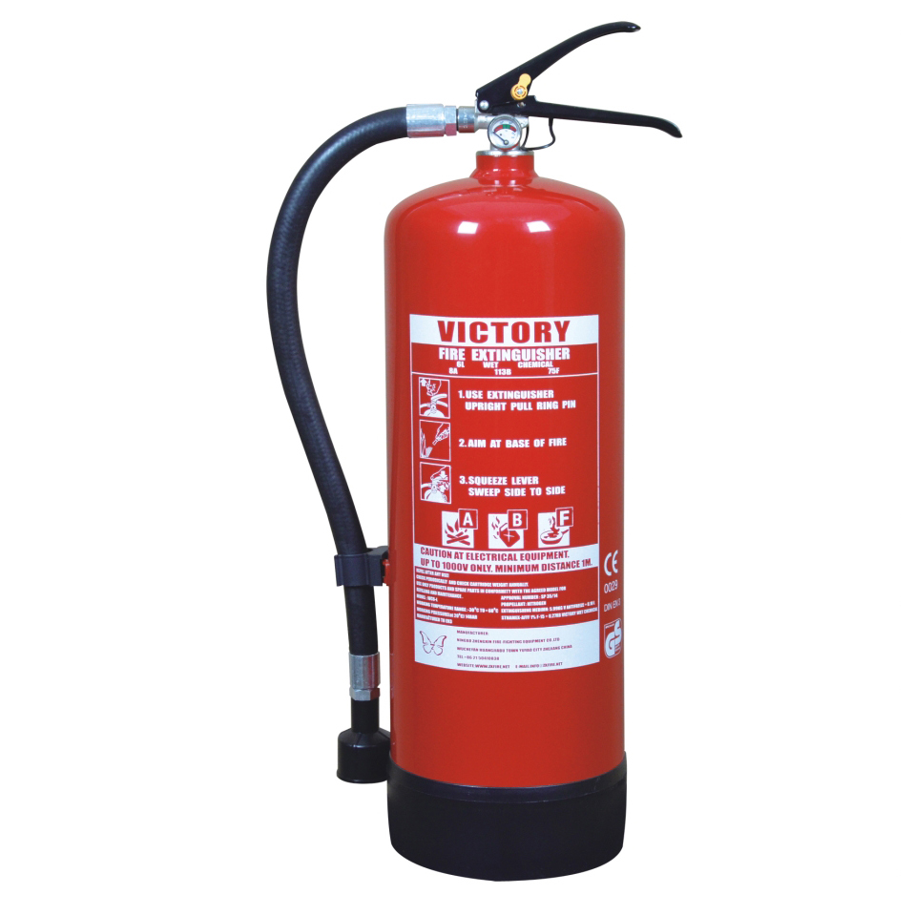
Procurement requires careful attention to specific operational variables. You must match the cylinder capacity exactly to your actual hazard volume. You calculate the necessary agent volume based on your appliance sizes. A small boutique cafe needs very different protection than a massive industrial food plant. Count the total number of your active deep fat fryers. Measure their total oil volume capacity accurately. Six-liter models handle standard, isolated fry setups efficiently. Large industrial fryers often require massive 2.5-gallon or larger interconnected units.
Facility Type | Typical Appliance Load | Recommended Minimum Capacity | Required Fire Rating |
|---|---|---|---|
Small Cafe / Food Truck | 1-2 Small Fryers | 6 Liters | Class K / Class F |
Medium Restaurant | 3-4 Fryers, Griddles | 2.5 Gallons | Class K / Class F |
Industrial Food Plant | Large Vat Fryers | Multiple 2.5+ Gallon Units | Class K / Class F |
Regulatory certifications dictate the fundamental safety baselines for your business. Verify UL 300, NFPA 10, and NFPA 96 compliance if operating in the US. Look for BS EN3 standards and the recognized BSI Kitemark in the UK and EU regions. Ensure every purchased unit features clear, unmistakable labeling. It must display Class K or Class F fire ratings prominently on the front decal.
Hardware durability defines long-term reliability and value. Commercial kitchens naturally present incredibly harsh environments. Airborne grease, constant moisture, and extreme heat cause rapid corrosion on cheap equipment. Choose solid stainless steel cylinder construction. It withstands these corrosive daily conditions effortlessly. Sanitary design also matters heavily in food spaces. Post-discharge cleaning must proceed smoothly and rapidly. Smooth stainless surfaces minimize bacterial cross-contamination risks in sensitive food processing areas.
Understand complex compatibility requirements before buying. Manual portable units never substitute your primary built-in systems. They function correctly only as secondary, supplementary defenses. Manual units are strictly intended for use after the automatic hood fire suppression system activates. Always rely on the automatic hood system first.
Buying the premium equipment only solves half your safety problem. Strategic unit placement ensures rapid deployment during high-stress emergencies. Code requirements mandate specific, calculated mounting locations. You must typically mount these units within 30 feet of the primary hazard area. Place them carefully along the primary path of egress. Operators must never feel trapped in a corner while reaching for suppression tools.
Staff training separates a minor, controlled incident from total facility disaster. Teach your entire culinary team the widely recognized PASS method. We adapt it specifically for wand applicators.
Pull the safety pin firmly to break the tamper seal.
Aim the wand tip downward directly at the fire base.
Squeeze the operating lever smoothly to release the chemical agent.
Sweep the gentle mist slowly side to side across the vat surface.
Establish crystal clear operational limits for your employees. We recommend documenting strict "Do's and Don'ts" in your employee handbook.
Do evaluate the visible fire size before acting aggressively.
Do not attempt manual suppression if the automatic hood system failed to shut off the gas fuel supply.
Do evacuate the building immediately if the fire spreads quickly beyond the initial appliance.
Inspection schedules require strict, uncompromising adherence. Lifecycle management guarantees your equipment maintains constant readiness. Perform basic monthly visual checks in-house. Inspect the pressure gauge to ensure the needle reads clearly in the green zone. Verify the metal safety pin remains intact. Check the cylinder body for obvious physical damage or rust. Schedule mandatory annual professional inspections. Jurisdictions also mandate intense hydrostatic testing intervals. These high-pressure tests typically occur every 5 to 12 years. Follow your local fire marshal directives exactly to avoid severe penalties.
Finalizing your procurement strategy demands highly careful vendor evaluation. Prioritize certified, dedicated fire protection equipment suppliers. General online retailers often sell outdated, unverified stock. Certified industry vendors ensure verifiable serial numbers on every device. They provide valid, freshly stamped inspection tags upon immediate delivery. They also supply the necessary compliance documentation required for your strict insurance records.
Identify your immediate, actionable next step. Do not order equipment blindly based on guesswork. Conduct a comprehensive facility fire risk assessment first. Alternatively, consult a licensed EHS professional directly. Ask them to audit your current kitchen appliance volumes thoroughly. They will recommend exact, tailored specifications suited perfectly to your unique kitchen layout. Issue an official purchase order only after confirming these critical hazard calculations. This careful approach guarantees optimal safety and unassailable legal compliance.
Investing in the correct suppression equipment remains absolutely non-negotiable. Food facility safety completely depends on this crucial decision. Strict legal compliance requires dedicated, grease-rated tools. Water and standard dry powders invite catastrophic disaster in active commercial kitchens.
Remember, purchasing the right hardware marks only the beginning of your responsibility. Equipment efficacy relies entirely on smart, strategic placement. It demands rigorous, uncompromising routine maintenance. Ongoing, active staff training ensures your team responds effectively under pressure. Equip your facility properly today. Protect your loyal staff, your valuable property, and your overall business livelihood from devastating cooking fires.
A: We generally do not recommend them for direct use on live electrical equipment. The fine mist spray possesses low conductivity, offering some safety margins. However, they are not primarily designed for electrical hazards unless explicitly rated for them. Always cut the power supply to the affected appliance first before attempting any fire suppression.
A: You must recharge the unit immediately after any use, even if you only discharged a tiny amount. For routine maintenance, lifecycle replacement or complex hydrostatic testing generally occurs every 5 to 12 years. This interval depends entirely on local fire codes and manufacturer specifications. Annual professional inspections will dictate when internal maintenance is required.
A: They refer to the exact same hazard: fires involving high-temperature cooking oils and animal fats. The difference lies strictly in regional nomenclature. The United States and North America use the "Class K" designation. Meanwhile, Europe, the UK, and Australasia classify these specific grease hazards as "Class F" fires.
A: Yes, you absolutely do. Local fire codes mandate manual backup units in every commercial kitchen. Standalone units provide a necessary supplementary defense. You should use them if the primary automatic hood suppression system fails to extinguish the fire completely. They never replace the primary system.


