
Views: 0 Author: Site Editor Publish Time: 2026-07-09 Origin: Site


Commercial kitchens face intense fire risks during every shift. Superheated cooking oils easily reach incredibly dangerous temperatures. These specific thermal hazards vastly exceed standard fire safety equipment capabilities. Throwing water on deep-fat fryer fires usually triggers instant disaster. Spraying dry powder on them causes explosive grease spread or rapid reignition. Standard units simply cannot handle the extreme heat of burning fat.
Protecting your kitchen staff and property demands a highly targeted approach. Purpose-built chemical units solve this problem efficiently. They neutralize high-temperature grease fires through specialized chemical reactions. This specific engineering ensures your operational continuity. It also guarantees critical life safety during emergencies. In this comprehensive guide, we explore the precise science behind these suppressants. You will understand why standard options fail miserably in commercial food environments. We also detail essential procurement criteria and crucial compliance standards. Read on to master kitchen fire defense strategies.
Chemical Neutralization: Wet chemical agents convert hazardous, burning cooking oils into a non-combustible soap-like crust (saponification).
Dual-Action Suppression: Extinguishes the initial flame while rapidly cooling the fuel source to prevent reignition.
Capacity Matching: Selecting the correct volume, such as a standard 6L wet chemical fire extinguisher, is critical for adequately covering commercial fryer surface areas.
Regulatory Compliance: Essential for meeting NFPA 10 standards and UL/BS EN3 ratings for commercial kitchen environments.
Cooking oils and animal fats behave differently than common combustibles. They reach auto-ignition temperatures above 600°F (315°C). The visible flame might disappear momentarily during initial suppression. However, residual heat causes immediate reignition. The cooking oil holds massive amounts of thermal energy. Standard extinguishers cannot remove this deep-seated heat. Once the initial suppressing cloud dissipates, oxygen contacts the hot vapor again. The fryer spontaneously erupts into flames. This reignition cycle continues until the core temperature drops significantly.
Introducing water-based agents into hot oil creates catastrophic reactions. Water vaporizes instantly upon hitting boiling fat. This phase change expands steam rapidly. It ejects burning oil forcefully across your kitchen. It severely endangers staff members standing nearby. Traditional foam units contain high water concentrations. They produce the exact same explosive spread. Spraying water on a grease fire essentially creates a localized fireball. You must strictly avoid any water-based suppression near commercial fryers.
Standard ABC dry powder temporarily smothers visible flames. The fine dust creates a temporary barrier against oxygen. However, they lack crucial cooling capacity. The oil's core temperature stays dangerously high beneath the powder. Once the powder settles or shifts, oxygen returns. The fat spontaneously reignites. Furthermore, dry chemicals bake onto hot kitchen surfaces. They form a hardened crust over delicate appliance sensors. This creates severe operational downtime.
Suppression Agent Performance Chart
Agent Type | Flame Knockdown | Cooling Effect | Reignition Prevention | Kitchen Safety Rating |
|---|---|---|---|---|
Water | Poor | Moderate | None (Explosive Risk) | Dangerous |
Dry Powder (ABC) | Good | Poor | Low | Inadequate |
Wet Chemical Solution | Excellent | Excellent | High (Saponification) | Optimal |
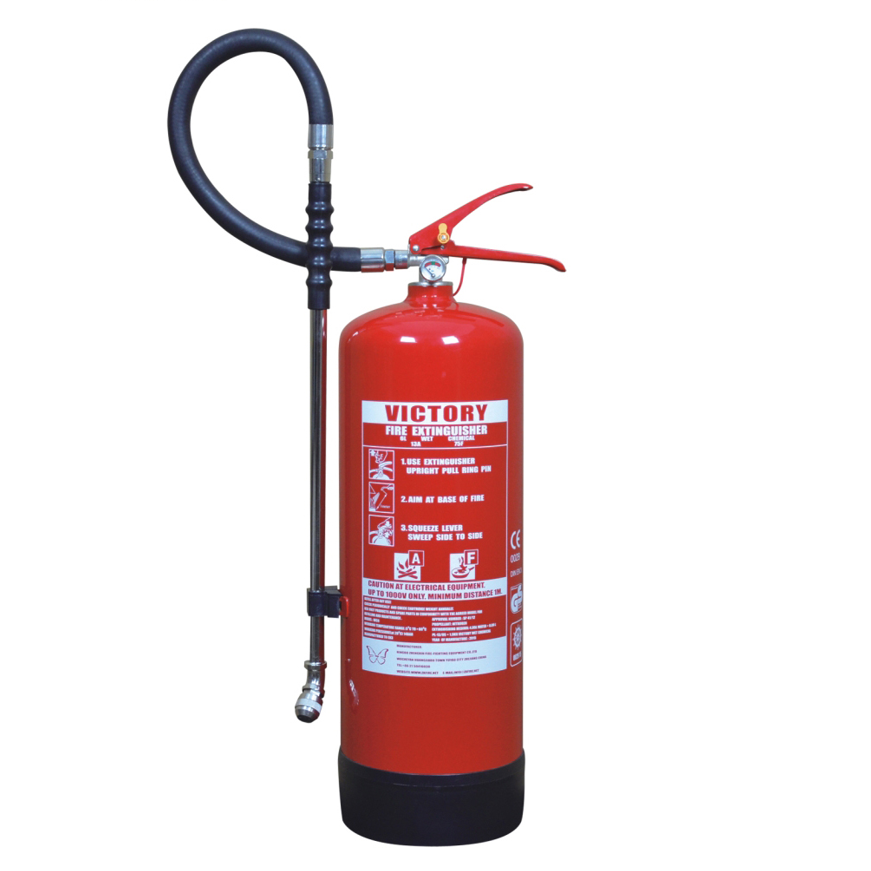
Deploying a compliant wet chemical fire extinguisher initiates a highly specific chemical reaction. The alkaline solution forcefully mixes into hot fatty acids. Manufacturers formulate these agents using potassium acetate, potassium citrate, or potassium carbonate. This interaction triggers saponification. The process creates a thick, soapy foam blanket over the hazard.
This foam crust permanently separates combustible vapors from atmospheric oxygen. You completely eliminate the fire's breathing mechanism. The Wet Chemical agents transform the dangerous liquid into a non-combustible solid. This physical transformation stops the fire instantly. It prevents harmful vapors from escaping into the kitchen exhaust hood. The soapy barrier remains intact even as the appliance slowly cools down.
Chemical blanketing represents only half the solution. The misting application of the fluid absorbs massive amounts of heat. The precise water content in the solution evaporates gently upon impact. This controlled evaporation pulls thermal energy away from the oil. It brings the oil's temperature safely below its critical flashpoint. The continuous discharge ensures deep cooling. The agent penetrates the entire vat of fat. This dual-action approach—smothering and cooling—makes these units uniquely effective.
You must accurately assess the surface area of your commercial fryers. Matching the suppression volume to the appliance size is critical. A standard 6L wet chemical fire extinguisher serves as the industry benchmark. It effectively covers medium-to-large commercial fryers found in high-volume restaurants. This size provides enough continuous discharge time to cool deep oil vats entirely.
Smaller 2L or 3L units suit food trucks or domestic environments. They protect single-basket setups or small countertop fryers. Under-sizing your equipment invites disaster. An insufficient agent volume might suppress the flame initially. However, it will fail to maintain the crucial foam blanket. The oil will reignite once the small canister empties. Always calculate your total cooking surface area before purchasing.
The application method heavily influences user safety. High-quality units feature an extended applicator lance. This specialized wand allows operators to stand at a safe distance from the intense radiant heat. It applies the chemical as a gentle, targeted mist.
A pressurized stream would splash hot oil dangerously onto the user. The lance design diffuses the pressure. It lets the agent fall softly onto the burning fat like rain. This prevents violent splashing. It also ensures an even distribution of the saponifying agent across the entire vat.
Managers must evaluate the post-fire operational impact. These localized agents are relatively easy to clean. Once the appliance cools, staff can simply scoop out the soapy crust. They can wipe down the surrounding stainless steel surfaces safely. The chemical does not produce toxic fumes.
Conversely, dry chemical powders contaminate entire kitchens. The fine dust infiltrates ventilation systems. It ruins HVAC filters and coats every prep surface. Recovering from a powder discharge takes days. Recovering from a wet chemical application takes hours. This efficiency protects your bottom line.
Equipment must meet specific hazard classifications. North American facilities require Class K fire ratings. European and Australasian facilities look for Class F ratings. These designations confirm the unit passes standardized grease-fire testing.
Always verify UL listings or BSI Kitemarks on the cylinder label. These independent testing laboratories validate the manufacturer's claims. They subject the extinguishers to rigorous live-fire tests. Non-certified units present severe legal and safety liabilities. Insurance providers will deny claims if facilities use non-compliant suppression tools.
Strategic placement determines response time during an emergency. You must position units according to strict regulatory frameworks.
Travel Distance: Extinguishers must sit within a specific travel distance from the cooking hazard. NFPA guidelines mandate a maximum distance of 30 feet.
Hazard Proximity: Avoid placing units directly next to the fryer. A sudden flare-up might block access to the extinguisher completely.
Mounting Height: Install brackets at easily accessible heights. Ensure shorter staff members can retrieve the heavy cylinder quickly.
Path of Egress: Mount the unit near kitchen exits. Operators should never trap themselves behind a fire while retrieving safety equipment.
Common Kitchen Placement Guidelines
Factor | Recommended Standard | Common Mistake to Avoid |
|---|---|---|
Distance from Fryer | 10 to 30 feet | Mounting directly beside the appliance |
Visibility | Clear line of sight with signage | Hiding behind storage racks or doors |
Accessibility | Unobstructed pathway | Placing heavy stock pots in front of the unit |
Human error compromises the best equipment. Proper training transforms ordinary staff into capable first responders. Managers must conduct regular safety drills.
Standoff Distance: Staff often panic and apply the chemical too closely. This disrupts the forming crust. Train them to use the full length of the extended lance.
Continuous Application: A major risk factor involves stopping the discharge too early. Operators might release the trigger once visible flames disappear.
Complete Discharge Protocol: Operators must learn to empty the entire cylinder contents. Applying the full volume ensures the cooling and sealing process completes fully.
Power Isolation: Train staff to shut off the gas or electrical supply to the fryer simultaneously. Removing the heat source accelerates the cooling phase.
Investing in purpose-built suppression tools represents a non-negotiable requirement for commercial kitchens. The extreme heat of Class K and Class F fires easily overpowers traditional water or powder units. The saponification process safely smothers and cools burning fat. This specialized reaction provides unparalleled asset protection and ensures strict regulatory compliance.
Take immediate action to secure your facility. Audit your current kitchen safety equipment today. Calculate the total surface area of your commercial fryers accurately. Match these volume requirements precisely before shortlisting compliant extinguisher models. Prioritize proper placement and commit to comprehensive staff training. These proactive steps will safeguard your business operations against devastating grease fires.
A: Yes, but with strict limitations. Many units pass a 35kV dielectric conductivity test, making accidental discharge near outlets safer. However, they are not primarily intended for Class C/E electrical fires. You must always cut power to kitchen appliances before or during use to ensure maximum operator safety.
A: They require a strict maintenance timeline. Kitchen staff should conduct quick visual checks monthly. Certified professionals must perform comprehensive servicing annually. Additionally, safety regulations mandate multi-year intervals for complete discharge, internal valve inspection, and hydrostatic cylinder testing.
A: There is no physical difference in the hazard itself. Both classifications represent fires involving combustible cooking oils and animal fats. Class K is the standard regulatory designation used in North America. Class F is the equivalent terminology utilized throughout Europe and Australasia.


