
Views: 0 Author: Site Editor Publish Time: 2026-08-12 Origin: Site


Electrical fires present immense risks where seconds matter and snap decisions carry heavy consequences. Deploying the wrong suppression agent during a Class C emergency can cause severe operator electrocution, inflict permanent hardware damage, and trigger paralyzing facility downtime. You must balance the immediate need for rapid fire knockdown against the long-term realities of collateral equipment damage and personal safety.
While dry powder and carbon dioxide agents both carry official ratings for live electrical fires, their post-discharge impacts differ radically. In this guide, you will discover the underlying mechanics of both suppression systems and their ideal deployment scenarios. We will explore how your specific environment dictates your choice. By understanding these distinct operational profiles, you can ensure you protect both human life and critical infrastructure effectively.
The Collateral Damage Factor: Dry powder leaves a corrosive, highly invasive residue that often destroys sensitive electronics that the fire itself didn't touch.
The Clean Alternative: A CO2 fire extinguisher smothers flames by displacing oxygen and cooling the area, leaving zero residue behind.
The Safety Caveat: CO2 carries a risk of asphyxiation in confined, poorly ventilated spaces (like small apartments or sealed server closets).
Compliance Matters: Procuring a UL CO2 extinguisher ensures reliable discharge pressure and tested cylinder integrity for high-stakes environments.
Electrical fires, categorized universally as Class C incidents, involve energized electrical equipment. The primary success criterion during such an emergency extends far beyond merely extinguishing the visible flame. You must neutralize the active threat safely without inadvertently conducting raw electricity back to the operator. Using standard water or foam agents creates a deadly conductive path. Thus, facility managers rely on specialized non-conductive agents to break the fire triangle safely and securely.
Beyond immediate life safety, a critical secondary success criterion emerges. You must minimize operational downtime. Preventing secondary damage to expensive, critical infrastructure becomes paramount during recovery. Think of sprawling data center server racks, automated manufacturing control panels, or high-end home electronics. If the chosen suppression agent destroys what the actual fire spared, the victory remains hollow and logistically devastating.
We evaluate our two primary contenders through this specific lens. Dry powder and carbon dioxide both interrupt electrical fires successfully. However, the final decision heavily hinges on two factors: the physical environment and the inherent value of the surrounding equipment. You have to weigh immediate knockdown power against the harsh realities of post-fire recovery.
Best practices dictate establishing clear operational priorities before outfitting any commercial or residential space:
Identify the maximum voltage present in the specific operational zone.
Assess the baseline ventilation rate and total volume of the target room.
Calculate the acceptable threshold for post-fire clean-up downtime.
Dry chemical agents aggressively interrupt the complex chemical chain reaction of a fire. They coat the active fuel source and rapidly extinguish the flames. Industrial facilities frequently favor these units for their impressive multi-class ratings. A standard ABC unit handles ordinary combustibles, flammable liquids, and energized electrical components with equal ferocity.
Despite this proven efficacy, operators face an implementation nightmare upon discharge. Industry professionals call this the "big mess" reality. The unit blasts a cloud of incredibly fine particulate dust into the air. This aggressive powder rapidly infiltrates cooling fans, unsealed circuit boards, and complex HVAC systems. It settles into every microscopic crevice within the room, traveling far beyond the immediate fire zone.
The aftermath proves even more destructive to infrastructure. Dry chemical powder, particularly blends utilizing monoammonium phosphate, reacts poorly to ambient moisture. It becomes mildly acidic when exposed to normal atmospheric humidity. This chemical shift leads to the gradual, irreversible corrosion of surviving electronics.
Common mistakes include deploying dry powder in server rooms simply because the canister carries a Class C rating. The final verdict for electrical environments remains strictly defined. The agent is highly effective at stopping the fire immediately. However, it almost guarantees the total loss of the targeted electronic equipment. You will face specialized, expensive, and prolonged clean-up procedures to restore the affected space.
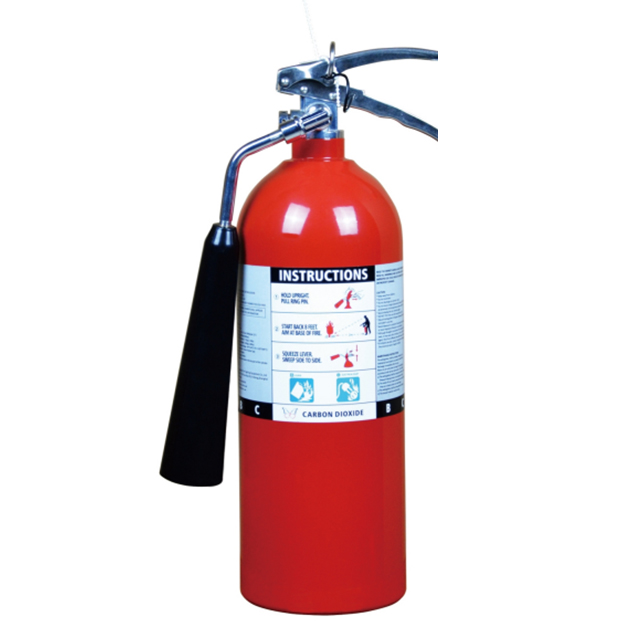
Understanding the core mechanism of action helps clarify its distinct advantages. A CO2 Fire Extinguisher works by rapidly displacing ambient oxygen around the active fuel source. It also delivers an intense cooling effect to the immediate fire zone. Because carbon dioxide functions entirely as a dense gas, it physically smothers the flame without depositing any solid particulate matter.
This zero-residue advantage directly translates to optimal facility outcomes. Since the gas quickly dissipates into the surrounding atmosphere, operators face literally zero clean-up time. You successfully preserve non-burned circuit boards, expensive hardware, and delicate manufacturing sensors. Facility managers routinely save massive amounts of recovery time by avoiding the abrasive contamination associated with standard powder agents.
We must maintain balanced claims regarding its overall capabilities. Carbon dioxide presents distinct operational limitations. It offers a notably shorter discharge range than dry powder equivalents. Operators must stand closer to the flame. The gas also struggles significantly in outdoor or highly windy environments where the agent disperses before properly smothering the fire. Furthermore, the extreme cold of the discharging gas poses a minor thermal shock risk to extremely sensitive, overheated micro-components.
You must also acknowledge a critical health and safety warning. Carbon dioxide aggressively displaces oxygen to achieve suppression. If deployed in unventilated, tightly confined spaces, it creates a severe asphyxiation risk for the operator. You must evacuate the premises and ventilate the area immediately after achieving successful suppression.
Mapping specific solutions to distinct scenarios ensures better facility safety. We evaluate varying environments based on their spatial constraints and the inherent vulnerability of their contents. A rigid decision matrix prevents costly procurement errors.
The clear winner here is carbon dioxide. Logic dictates zero residue prevents catastrophic data center contamination. In these highly controlled environments, an accidental discharge of dry powder causes irreversible hardware loss. Gas suppression neatly avoids this fate, ensuring servers remain operational immediately following ventilation.
The winner shifts firmly to dry powder for industrial settings. These zones often feature mixed fire risks spanning Class A, B, and C categories. You frequently encounter large, open, or partially outdoor areas where wind dispersion renders gas highly ineffective. In a massive fabrication plant, collateral dust damage matters far less than achieving immediate, powerful flame knockdown.
This residential scenario presents a conditional winner. Carbon dioxide successfully prevents the massive mess that ruins standard home appliances and personal computers. However, residents require proper training. They must ventilate the room immediately after use to ensure personal safety. Newer, specialized clean-agent alternatives like Element extinguishers are actively entering this specific niche. They aim to solve the confined-space asphyxiation risks associated with traditional gas units while maintaining a residue-free footprint.
Below is a functional comparison chart highlighting the core operational differences.
Suppression Agent | Post-Fire Clean-Up | Collateral Damage Risk | Ideal Deployment Environment |
|---|---|---|---|
Dry Powder (ABC) | Extensive and expensive | High (Corrosive to electronics) | Industrial floors, open manufacturing, outdoors |
Carbon Dioxide (CO2) | None (Gas dissipates naturally) | Low (Potential thermal shock only) | Server rooms, medical labs, IT spaces |
Quality assurance becomes a literal life-or-death metric when dealing with highly compressed gases. Manufacturers store carbon dioxide under extreme internal pressure, frequently exceeding 800 PSI. Purchasing a heavily vetted UL CO2 Extinguisher remains absolutely non-negotiable for baseline operator safety. Underwriters Laboratories tests these robust cylinders rigorously. They verify structural integrity and guarantee reliable discharge pressure during actual emergencies.
Commercial and industrial facilities face strict compliance mandates globally. You must adhere to local fire codes, such as the NFPA 10 standard in the United States. These precise frameworks dictate specific placement distances, highly visible signage, and mandatory maintenance schedules for your units. Non-compliance results in heavy fines and voided insurance policies during an active incident.
Maintenance realities differ significantly between agent types. Because of their high-pressure nature, carbon dioxide cylinders demand precise periodic hydrostatic testing. Certified technicians must verify the metal housing can still safely contain the intense internal pressure without rupturing over time. You cannot treat these specialized units with the same lax maintenance routines often incorrectly applied to basic dry powder canisters.
Follow these essential best practices for responsible facility procurement:
Always verify the physical UL stamped emblem on the metal cylinder housing.
Ensure the gross weight is clearly documented on the current maintenance tag.
Partner strictly with certified technicians for your annual compliance inspections.
Inspect the specialized discharge horn regularly for cracks or blockages.
Selecting the proper suppression tool ultimately depends on your environment's unique vulnerabilities. If your primary goal involves protecting valuable electronics and avoiding catastrophic clean-up procedures, carbon dioxide stands out as the superior choice. Conversely, if your environment is outdoors, highly ventilated, and plagued by unpredictable mixed fire risks, standard dry powder remains a highly necessary compromise.
Take immediate action to secure your facility effectively today:
Audit your current fire safety layout to identify vulnerable IT and electronic zones.
Check the active UL ratings and inspection dates on all existing cylinder units.
Consult with a certified facility safety engineer to strategically swap dry powder units for gas agents in high-value electronic areas.
Train your onsite personnel regarding the asphyxiation risks and proper post-discharge ventilation procedures.
A: Rarely. While it leaves absolutely no residue, the extreme cold of the discharging gas can technically cause thermal shock to heavily overheated, sensitive components. However, this minimal risk is vastly preferable to the guaranteed corrosive damage caused by dry chemical powder.
A: Extremely difficult. The process requires industrial HEPA vacuums and specialized electronic cleaning solvents. Traditional sweeping or standard vacuuming often makes the situation worse by pushing the abrasive, acidic dust deeper into complex hardware and unsealed circuit boards.
A: Yes, but with strict caveats. Operators must discharge the unit, evacuate the area immediately, and ventilate the room thoroughly once the fire is completely out. This immediate action prevents severe oxygen deprivation in confined residential spaces.
A: No. Carbon dioxide is primarily rated for Class B (flammable liquids) and Class C (electrical) incidents. The dense gas dissipates too quickly and may not permanently extinguish deeply smoldering Class A materials, allowing them to reignite easily.


