
Views: 0 Author: Site Editor Publish Time: 2026-08-12 Origin: Site


Commercial kitchens operate in a constant state of severe hazard. Cooking oil and fat fires scale rapidly and aggressively. They auto-ignite at extreme temperatures. These liquids often soar above 340°C (644°F) in a matter of minutes. Traditional fire suppression methods simply fail under these extreme conditions. Worse, they can actively aggravate an oil fire. You risk facility destruction, staff injury, and severe operational downtime if you deploy the wrong equipment. A Wet Chemical Extinguisher is specifically engineered for these high-temperature environments. It uses a unique chemical reaction rather than just trying to cool or smother the flames. Evaluating the underlying science, strict compliance requirements, and exact capacity options guarantees reliable hazard mitigation. This guide breaks down exactly how these specialized units protect your kitchen assets.
Wet chemical units suppress oil fires through saponification—converting burning fat into a non-combustible soapy crust.
Standard water or dry powder extinguishers create severe hazards (steam explosions or re-ignition) when used on cooking oils.
Installing an EN Wet Chemical Extinguisher is often a strict requirement for commercial kitchen insurance validity and regulatory compliance (Class F fire ratings).
Correct deployment requires emptying the entire cylinder from a safe distance to ensure the cooling and sealing process is fully completed.
Saponification relies on an aggressive chemical transformation. It turns hazardous burning oil into a harmless soap layer. The cylinder holds a specialized alkaline mixture. Manufacturers commonly formulate this mixture using potassium acetate, potassium citrate, or potassium carbonate. You trigger a rapid chemical change when you spray this alkaline blend over hot fatty acids. The alkaline agents react intensely against the burning fat. They immediately form a thick, soapy, foam-like crust over the entire oil surface. This layer extinguishes the visible flames almost instantly. You rely on this rapid crust formation to gain initial control over the emergency. It physically separates the deep fat fuel source from the ambient oxygen in the kitchen.
The soapy crust provides a critical, impenetrable barrier. It traps highly combustible vapors beneath the surface. Hot oil continuously releases flammable gases into the air. The fire flares up again if oxygen reaches these escaping gases. The chemical foam layer completely seals off the oxygen supply. It halts the entire combustion cycle in its tracks. You avoid dangerous flash-back incidents entirely. Staff members remain safe from sudden re-ignition. This vapor sealing process acts as your primary defense against persistent kitchen fires. It ensures the environment remains stable while emergency responders travel to your facility.
Saponification alone cannot solve the entire problem. You must also lower the extreme temperature of the oil. The extinguisher delivers a very fine, gentle mist during discharge. This distinct spray pattern cools the fat significantly. It drives the liquid temperature well below its auto-ignition threshold. The water content inside the chemical mixture evaporates harmlessly upon contact. This rapid evaporation process absorbs massive amounts of heat energy. The liquid droplets do not plunge deeply into the oil. You maintain a perfectly stable surface. Proper, sustained cooling guarantees the fire stays out permanently.
Safety demands appropriate distance during a fire emergency. You cannot stand intimately close to boiling, burning oil. These specialized units feature an extended applicator wand or lance. This tool allows the operator to maintain a crucial safety gap. You can easily stand at least one meter away from the hazard. The nozzle design deliberately ensures a low-velocity mist delivery. The chemical drops gently onto the troubled oil. High-pressure jets cause disastrous splashing. The lance prevents this severe hazard entirely. You apply the agent smoothly, securely, and accurately every single time.
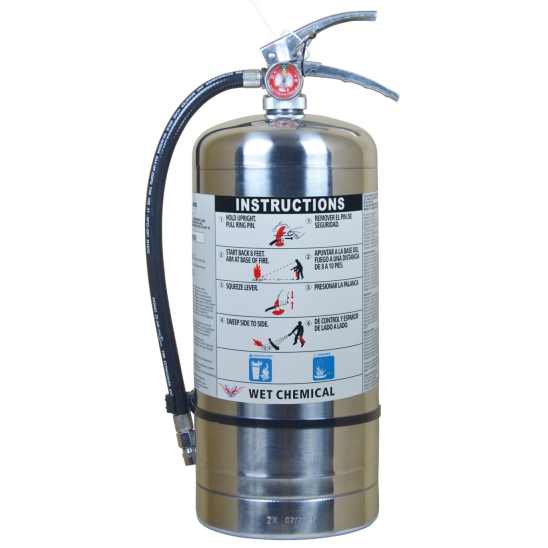
Many facilities make a fatal error regarding fire safety. They place standard, multi-purpose extinguishers near heavy-duty fryers. You must understand exactly why these alternatives fail. They actively endanger your entire operation during a crisis. The following chart illustrates how different extinguishing agents react when applied to high-temperature cooking oil fires.
Extinguishing Agent | Cooling Capacity | Re-ignition Risk | Operational Hazard |
|---|---|---|---|
Water | Minimal | High | Severe Steam Explosion |
Dry Powder | None | Extremely High | Equipment Contamination |
Carbon Dioxide (CO2) | Poor | Moderate | Splashing Hot Oil |
Wet Chemical | Excellent | Eliminated | Safe and Localized |
Water creates catastrophic reactions near hot oil. It boils the exact second it touches the boiling fat. One liter of liquid water expands into roughly 1,700 liters of steam. This massive expansion happens in a tiny fraction of a second. The steam physically throws burning oil everywhere. It scatters flaming liquid across your entire kitchen. Staff members inevitably suffer severe burns. The fire quickly jumps to adjacent walls and overhead exhaust hoods. You rapidly escalate a manageable fryer fire into total facility destruction. Operators must never use water on burning fat under any circumstances.
Powder units look effective during the first few seconds. They knock down visible flames very quickly. They temporarily smother the fire surface. However, dry powder provides absolutely zero cooling capability. The underlying oil remains incredibly hot. The hot oil immediately auto-ignites once the powder cloud settles. You face a sudden, fierce flash-back. Furthermore, powder creates a massive cleanup disaster. It rapidly infiltrates sensitive kitchen equipment. It ruins ventilation motors and complex electrical panels. You face extensive operational downtime simply cleaning up the powder residue.
Carbon dioxide aggressively strips oxygen away from flames. It knocks out fires quickly in electrical environments. Yet, CO2 completely lacks adequate cooling capacity for deep fat fryers. The extreme heat of the cooking oil remains totally unchanged. The fire simply restarts the moment the gas dissipates into the room. More dangerously, CO2 discharges under extremely high pressure. This forceful blast can physically blow burning oil right out of the vat. You accidentally spray liquid fire onto nearby counters and appliances. CO2 units belong exclusively near electrical panels, never fryers.
Fires behave differently based entirely on their fuel source. Regulators assign specific classes to different hazards to prevent confusion. Regulators in Europe and Australasia use the Class F designation. North American authorities use the Class K standard. Cooking oils require their own completely distinct category. They possess exceptionally high specific heat capacities. They absorb and retain heat much longer than regular flammable liquids like gasoline. Standard Class B ratings completely ignore this intense heat retention. You need specialized classifications to ensure proper hazard protection.
Compliance requires proven, tested reliability. You must look for strict, recognized testing marks on the equipment. An EN Wet Chemical Extinguisher specifically meets the rigorous BS EN3 standard. This certification guarantees the cylinder functions flawlessly under high pressure. Safety managers must proactively verify specific quality marks before installation. Look for the BSI Kitemark or CE/UKCA stamps on the metal body. These symbols confirm rigorous third-party testing protocols. You guarantee your equipment performs exactly as promised. Untested units put your staff at unacceptable risk.
Commercial insurance policies always carry strict operational conditions. Modern risk control frameworks demand specific fire safety measures from restaurant owners. Assessors explicitly look for dedicated wet chemical protection near deep fat fryers. Failing to provide this exact equipment carries extremely heavy consequences. Insurers frequently void fire damage claims entirely if you lack proper coverage. You cannot substitute standard powder units just to save money. We regularly see facilities lose millions because they ignored policy mandates. Proper suppression safeguards your financial stability just as much as your physical building.
Best Practice: Schedule an annual walkthrough with your insurance broker. Verify your extinguisher placements match your current policy requirements exactly.
Common Mistake: Relying on a standard dry powder extinguisher in the kitchen, falsely believing it covers all possible fire types.
Capacity matters deeply when fighting oil fires. You cannot simply guess the required cylinder size. Extinguisher volume maps directly to the specific surface area of your deep fat fryer. It also correlates to the total oil volume present. A standard 75F rating typically covers up to 0.11 square meters of oil surface. This specific rating usually corresponds to a 6-liter unit. You must accurately measure your vat dimensions. Mismatched capacities fail to form a sufficiently thick crust. The extreme heat will easily break through a thin chemical layer.
The 6-liter model remains the absolute industry sweet spot. Most commercial kitchens confidently rely on it daily. It perfectly balances two highly critical factors. First, it holds sufficient chemical volume to confidently prevent re-ignition. Second, it maintains a manageable overall weight. Staff members can quickly lift and maneuver a 6-liter cylinder during panic situations. A Wet Chemical Extinguisher of this precise size handles standard fryers exceptionally well. It provides the most reliable frontline defense without causing user fatigue.
Sometimes, a single unit falls dangerously short. Larger industrial vats absolutely demand more comprehensive coverage. Multiple fryers situated close together significantly increase your total hazard zone. You might need several 6-liter units placed strategically around the room. Heavy-duty food processing operations often step up to larger 9-liter cylinders. Exceptionally large facilities integrate automated suppression systems directly into their extraction hoods. Always audit your total kitchen oil capacity. You must scale your suppression strategy to effectively match your highest possible risk scenario.
Rigorous training saves lives during chaotic emergencies. You must heavily emphasize one critical rule during safety drills. Operators must continuously discharge the entire cylinder. They must do this even if the visible flames disappear immediately. The chemical strongly needs time to work properly. A partial discharge creates a weak, overly thin crust. The immense heat trapped beneath will quickly crack it wide open. Emptying the entire tank ensures the soapy layer grows thick enough. It holds strong until the underlying oil cools completely to room temperature.
Follow this exact deployment sequence for optimal safety:
Pull the safety pin to securely break the tamper seal.
Stand at least one full meter back from the burning fryer.
Hold the applicator lance firmly, aiming directly above the oil surface.
Squeeze the operational lever gently to start the fine mist discharge.
Empty the entire contents to build a thick, unbreakable protective crust.
Appropriate distance prevents catastrophic user injury. Operators must follow strict positioning rules during deployment. The extended lance practically enforces a safe operating gap. You should stand at least one meter away from the burning vat at all times. Stepping closer exposes you to intense radiant heat. It also risks dangerous splash-back if the oil unexpectedly bubbles. The specialized applicator wand lets you guide the mist precisely. You stay completely out of the direct danger zone while maintaining full control over the discharge flow.
Recovery requires careful, systematic handling. Saponification leaves a distinct, solid soapy crust behind. Set realistic expectations for your cleanup crew. The applied chemical mixture acts mildly corrosive. Fortunately, the resulting mess remains highly localized. It does not spread airborne like fine dry powder. Once the oil cools completely, you simply scoop the solid crust out safely. Staff can then thoroughly wash and neutralize the metal vat using warm, soapy water. You minimize operational downtime significantly. The kitchen returns to profitable status much faster.
Targeted Chemistry Wins: Protecting commercial cooking assets relies entirely on rapid saponification and targeted cooling. Alternative suppression methods actively worsen the crisis.
Mandatory Compliance: Installing proper wet chemical units represents a non-negotiable step for meeting strict EN standards and protecting your insurance coverage.
Audit Your Risk: Facility managers must audit their current fryer capacities against their extinguisher volume. Ensure your coverage genuinely matches your physical surface area.
Next Step: Consult a certified fire safety professional today. They will help you precisely spec the correct EN-certified units tailored to your specific kitchen layout and rigorous insurance requirements.
A: Yes, many units undergo dielectric testing, often safely passing up to 35kV limits. This allows for accidental use on live electrical equipment situated near fryers. However, they remain highly specialized for Class F fires. You should never intend to use them as your primary electrical fire solution.
A: They refer to the exact same hazard involving cooking oils and fats. Class F represents the European and Australasian designation under the EN standard. Class K serves as the standard North American designation under NFPA guidelines. Both require identical saponification chemistry.
A: It can easily take anywhere from 30 minutes to several hours. The timeline depends entirely on the total volume of hot oil. You must never disturb the crust until the oil completely reaches room temperature. Prematurely breaking the seal risks sudden re-ignition.
A: These specific cylinders typically require a basic service inspection annually. They need an extended service and full chemical refill every five years. Exact maintenance timelines heavily depend on your local fire safety regulations and specific manufacturer guidelines.


