
Views: 0 Author: Site Editor Publish Time: 2026-07-21 Origin: Site


The relentless pace of a modern culinary environment creates immense operational pressure. Commercial kitchens represent one of the highest-risk environments for catastrophic fire loss. Facility teams continuously heat large volumes of cooking oils and animal fats to dangerous temperatures. Relying on the wrong suppression tool does not just fail to extinguish these specific fires. It often exacerbates them. You risk severe facility damage and serious compliance violations.
For decision-makers and facility managers evaluating fire safety procurement, understanding the right tools is essential. We will explore the mechanical and regulatory role of a 6l wet chemical fire extinguisher. You will learn how it safeguards assets, ensures continuous operations, and helps you pass rigorous safety audits.
Targeted Suppression: A wet chemical fire extinguisher is the only reliable handheld solution for Class K (US) / Class F (EU/UK) cooking oil fires.
Saponification Mechanism: These units discharge a potassium-based solution that reacts with hot oil to form a non-combustible, soapy crust, preventing re-ignition.
The 6L Sweet Spot: The 6L capacity balances sufficient firefighting power (typically a 75F rating) with ergonomic handling for kitchen staff during high-stress emergencies.
Compliance Necessity: Deployment of these specific units is heavily mandated by commercial kitchen safety standards (e.g., NFPA 10/96, OSHA, EN3).
Modern commercial kitchens operate continuously under extreme heat. This environment generates highly specific fire hazards. Standard firefighting equipment often proves entirely ineffective against these unique threats.
Cooking oils auto-ignite at extremely high temperatures. They routinely exceed 340°C (644°F) before bursting into flames. Standard cooling agents simply evaporate before penetrating this intense heat threshold. You cannot extinguish a deep fryer blaze with basic equipment. The sheer volume of thermal energy demands a highly specialized chemical response.
Applying water-based extinguishers to grease fires creates catastrophic results. Water instantly vaporizes upon contact with superheated oil. This causes an immediate, explosive vapor expansion. The resulting blast spreads burning oil across the entire kitchen. It instantly endangers your staff and surrounding equipment. Using foam units presents similar risks. Most standard foams cannot handle the extreme temperatures. They break down rapidly and allow the fire to continue spreading.
Common Mistake: Facility managers sometimes place water or standard foam units too close to cooking stations. Staff might mistakenly grab them during a panic, turning a small fryer fire into a major disaster.
Dry powder extinguishers are common in many facilities. They effectively smother Class A, B, and C fires. However, they fail utterly in commercial kitchens. While dry powder may temporarily smother grease flames, it lacks any cooling effect. The ambient temperature of the oil remains above the auto-ignition point. Once the powder cloud dissipates, the superheated oil typically re-ignites immediately.
Furthermore, deploying a dry powder unit in a food preparation area causes severe operational setbacks. The fine powder infiltrates every crevice. It permanently ruins all exposed food stock. It severely damages expensive commercial cooking appliances. Cleanup efforts can force your kitchen to close for days.
A viable suppression solution must meet strict criteria. It must rapidly extinguish the initial flame. It must permanently cool the deep fuel source. It must prevent dangerous splashing during application. Finally, it must minimize collateral damage to your expensive commercial cooking appliances. Only a dedicated wet chemical fire extinguisher meets these demanding requirements.
Understanding the internal mechanics of these extinguishers clarifies their industry dominance. They do not merely smother the fire. They fundamentally alter the chemical composition of the burning fuel.
These specialized cylinders contain specific chemical blends. Manufacturers fill them with potassium acetate, potassium citrate, or potassium carbonate solutions. These alkaline mixtures remain stable inside the cylinder. They react violently only when exposed to extreme heat and fatty acids.
When deployed, the chemical agent works through a highly structured three-phase process. We outline these sequential phases below.
Phase 1: Rapid Cooling. The nozzle disperses the agent as a fine, gentle mist. This mist blankets the surface of the cooking oil. It instantly lowers the temperature of the oil below its auto-ignition point. This initial cooling breaks the fire tetrahedron.
Phase 2: Saponification Process. The alkaline solution chemically reacts with the fatty acids present in the burning animal fats or vegetable oils. This distinct chemical transformation is known as saponification.
Phase 3: Oxygen Deprivation. The saponification reaction creates a thick, soapy, foam-like crust. This crust seals the surface of the cooking oil. It effectively cuts off the ambient oxygen supply. It also traps highly flammable vapors underneath, completely preventing re-ignition.
The chemical alone is not enough. The delivery method matters immensely. These units feature a unique low-pressure applicator lance. The lance allows the user to stand at a safe distance from the intense radiant heat. It applies the agent gently. A high-pressure spray would agitate the burning oil. The gentle application ensures the wet chemical builds the saponification crust without disturbing the dangerous liquid underneath.
Extinguishing Agent Comparison Chart
Agent Type | Cooling Effect | Smothering Effect | Re-ignition Risk | Equipment Damage |
|---|---|---|---|---|
Standard Water | Low (Evaporates) | None | Extreme (Explosive) | High (Water damage) |
Dry Powder | None | Temporary | High | Severe (Contamination) |
Standard Foam | Moderate | Poor on hot oil | High | Moderate |
Wet Chemical | Excellent | Permanent (Crust) | Minimal | Low (Washable residue) |
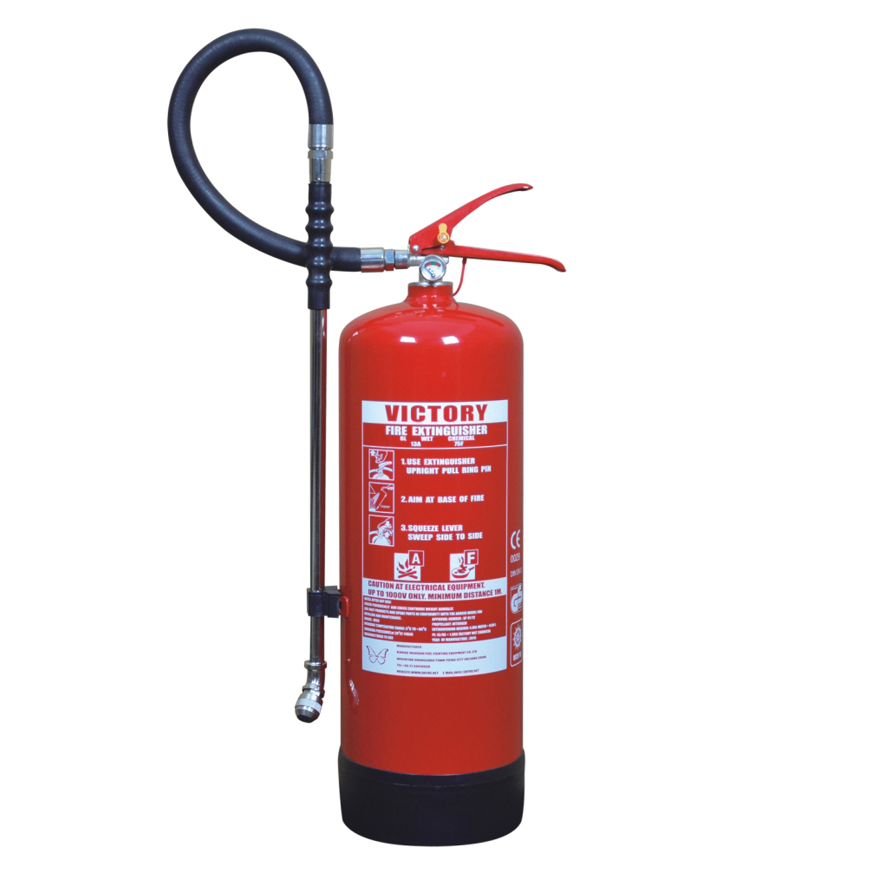
Fire safety equipment comes in various sizes. However, commercial kitchens overwhelmingly favor the 6-liter capacity. This size represents the perfect intersection of tactical capability and human ergonomics.
Manufacturers produce smaller 2L and 3L variants. These smaller cylinders work well for mobile food trucks or small cafes. However, they lack the volume needed for major hazards. A 6L wet chemical fire extinguisher provides the sustained discharge time necessary to cover large commercial deep fat fryers. These fryers typically hold up to 75 liters of oil. Attempting to suppress a 75-liter vat with a 3L extinguisher often results in partial saponification. The fire will inevitably break through the incomplete crust.
During an active fire emergency, adrenaline spikes and fine motor skills degrade. Equipment must remain manageable. A fully loaded 6L unit weighs approximately 10 to 11 kg. This weight represents the maximum optimal limit for average kitchen staff. Operators can safely lift it off the wall bracket. They can maneuver it swiftly around prep stations. They can easily operate the unit with one hand holding the lance and the other squeezing the trigger.
Regulatory bodies measure extinguisher effectiveness through standardized testing. A standard 6L model generally achieves a 13A and 75F fire rating. The 75F designation confirms the unit can suppress 75 liters of burning cooking oil. This official rating ensures you remain legally compliant. It provides enough chemical volume to cover a standard commercial fryer setup in a single, continuous application.
Modern commercial kitchens utilize highly complex safety infrastructures. They usually install primary automatic fixed suppression systems above the fryers. However, fixed systems can fail. Nozzles can clog with heavy grease. Activation sensors can malfunction. In these scenarios, a 6L unit acts as your mandatory secondary defense. It also handles localized flare-ups outside the fixed system's coverage zone. Facilities cannot rely solely on automated hoods. Handheld wet chemical units remain critical backup assets.
Purchasing the correct extinguisher solves only half the problem. You must deploy it correctly. You must also train your staff to operate it safely under severe pressure.
Improper placement renders safety equipment useless. Fire safety regulations dictate strict siting requirements for commercial kitchens.
Mounting standards: You must mount the unit on a secure wall bracket or designated floor stand. Never leave cylinders resting directly on wet kitchen floors.
Distance parameters: Siting requirements dictate placement along clear exit routes.
Proximity rules: Place the unit no closer than 10 meters, but no further than 30 meters, from the primary cooking hazard.
Safety logic: Placing the extinguisher too close forces staff to reach into the active fire zone to grab it. Placing it too far wastes critical response seconds.
Kitchen teams experience high turnover rates. Consistent, clear training is mandatory. You should teach the universal PASS method, but modify it specifically for wet chemical units.
Pull the safety pin to break the tamper seal.
Aim the applicator lance over the fire.
Squeeze the operating lever fully.
Sweep the lance gently above the hazard.
Crucial Training Distinction: Standard fire training teaches staff to aim at the base of the fire. You must un-teach this habit for grease fires. Staff must let the wet chemical fall gently onto the surface of the oil. They should apply it in soft, circular motions. Spraying directly into the oil causes dangerous splashing and prevents the saponification crust from forming properly.
Facility managers must plan for the aftermath of a fire. The chemical agent is mildly corrosive to metals. Staff must understand post-fire cleanup protocols. They require basic PPE, including thick gloves and safety goggles. They must wash down all affected stainless steel surfaces thoroughly. Prompt cleanup with warm water prevents permanent equipment degradation and restores operational hygiene quickly.
Securing commercial kitchen safety requires rigorous attention to procurement standards. Selecting substandard equipment creates unacceptable liability risks. You must navigate regional certifications and establish reliable maintenance schedules.
Never purchase uncertified fire safety equipment. You must ensure every unit carries relevant regional certifications. In North America, look for UL 300 compliance support. In European and British markets, demand the CE mark, BSI Kitemark, and strict adherence to the EN3 standard.
Kitchen environments feature high humidity and heavy airborne grease. These conditions rapidly degrade cheap equipment. Look for units built with marine-grade anti-corrosion cylinders. Demand robust internal linings. A high-quality exterior finish prevents rust from compromising the cylinder's structural integrity over time.
An extinguisher is a pressurized vessel. It requires systematic, documented inspections to guarantee functionality during an emergency. Establish a strict servicing lifecycle.
Maintenance Lifecycle Schedule
Inspection Interval | Responsible Party | Key Actions Required |
|---|---|---|
Monthly | Internal Facility Staff | Check pressure gauge (must be green). Verify safety pin intact. Ensure lance is unblocked. |
Annually | Certified Fire Technician | Conduct comprehensive weight check. Test internal trigger mechanisms. Update service tags. |
5-Yearly | Certified Fire Technician | Perform extended service. Complete discharge of unit. Inspect internal lining. Refill chemicals. |
Your relationship with your fire safety supplier matters immensely. Select B2B fire safety suppliers that offer comprehensive service packages. Look for vendors providing transparent maintenance contracts. Ensure they offer fast refill turnaround times following a discharge. The best suppliers also include staff training modules and digital compliance tracking as part of their procurement package. This level of support ensures your facility remains protected and fully compliant year-round.
Investing in the correct suppression technology is not merely a box-ticking exercise for compliance. It remains a scientifically proven, necessary safeguard against the unique threat of superheated cooking oil fires. These advanced tools protect your personnel. They shield your expensive culinary equipment. They ensure your business can recover quickly from a localized flare-up without suffering catastrophic facility loss.
Facility managers should immediately audit their current fire suppression inventory. You must verify that your existing units precisely match the volume capacity of your commercial fryers. Remove obsolete or mismatched extinguishers from the cooking zones. Finally, consult with a certified fire safety provider to procure standard-compliant units immediately. Taking these actionable steps today guarantees a safer, more resilient kitchen environment tomorrow.
A: While some modern wet chemical units pass a 35kV dielectric test, they are not designed for electrical fires. Passing the test means accidental discharge near electricity is safe for the user. However, a dedicated CO2 extinguisher should always be stationed nearby to handle primary electrical hazards safely.
A: A standard 6L unit typically provides a continuous, controlled discharge lasting between 40 to 50 seconds. This duration allows enough time for the operator to completely blanket a large commercial fryer and build a secure saponification crust.
A: The agent is mildly alkaline and can cause slow corrosion if left indefinitely. However, once the fire is suppressed and the equipment cools, you can safely clean the soapy residue off with warm water and standard cleaning agents. This process usually saves the stainless steel equipment from permanent ruin.
A: One 6L unit is typically rated for up to 75 liters of cooking oil (a 75F rating). If a commercial kitchen operates multiple large vats exceeding this volume, risk assessments usually mandate purchasing multiple units or installing a dedicated fixed suppression system to ensure adequate coverage.


