
Views: 0 Author: Site Editor Publish Time: 2026-06-25 Origin: Site


Fire safety requires more than just placing generic suppression tools around a building. Deploying the correct agent dictates whether a small flame is safely managed or escalates into a catastrophic event. Meeting NFPA and OSHA standards demands precise matching between environmental hazards and your suppression methods. Many facility managers default to multi-purpose units and overlook the highly effective role of a water fire Extinguisher.
Misjudging this critical safety choice often leads to excessive equipment damage or serious operational hazards. This guide evaluates exactly when you should deploy water-based units in commercial and industrial environments. You will understand their operational mechanics, recognize severe deployment risks, and learn how to compare them against multi-purpose alternatives. By analyzing specific industry use cases and compliance regulations, you can optimize your facility safety protocols and ensure your team is prepared for ordinary combustible hazards.
Target Hazard: A water fire extinguisher is exclusively designed for Class A fires involving ordinary combustibles (wood, paper, textiles, plastics).
Mechanism: It extinguishes flames by removing the heat element of the fire triangle, offering a clean, chemical-free suppression method.
Critical Limitation: Deploying standard water units on Class B (flammable liquids) or Class C (electrical) fires introduces severe safety risks, including electrocution and fire spread.
Cost & Maintenance: Water units typically offer lower recharge costs and easier clean-up compared to dry chemical alternatives, provided environmental conditions (like freezing temperatures) are managed.
Building safety protocols require a granular understanding of specific fire risks. Class A fires remain the most common hazard in commercial spaces. They ignite from ordinary combustibles. Common materials include paper, wood, cloth, rubber, and various plastics. These materials produce ember-producing fires. Such fires require deep penetration and rapid cooling to prevent reignition. A specialized suppression approach proves vital here.
Certain industries operate in environments completely dominated by Class A risks. Lumber yards handle massive volumes of dry wood. Textile manufacturing plants process highly flammable fabrics. Archives and libraries store irreplaceable paper documents. Paper mills generate extensive combustible dust and pulp. In these specific settings, deploying a water-based unit offers the most logical and effective suppression strategy. The cooling agent penetrates deep into the porous materials.
Many organizations make the mistake of over-specification. Facility managers frequently default to ABC dry chemical units for convenience. This widespread practice creates significant operational problems. Dry chemical powder leaves a highly corrosive residue. It damages sensitive electronics. It ruins unaffected inventory in the surrounding area. The cleanup process requires professional remediation. For environments solely facing Class A risks, chemical powder introduces unnecessary operational burdens. Water provides a clean, residue-free alternative.
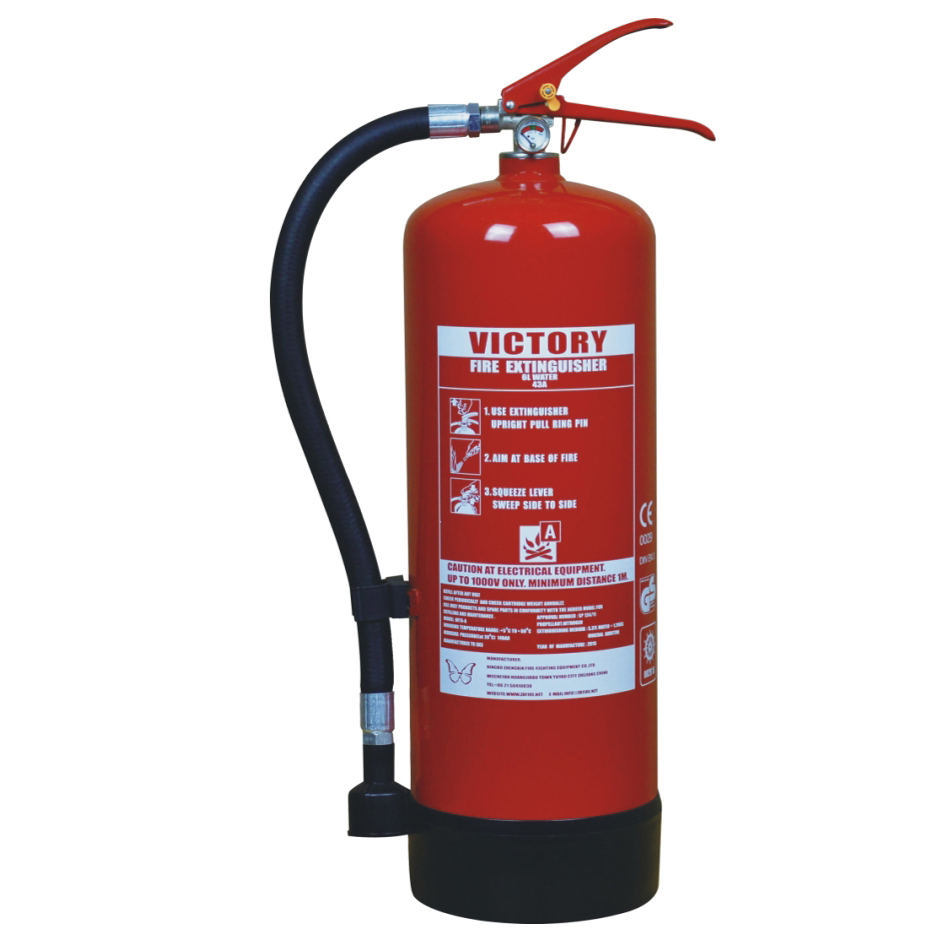
Fire requires three elements to survive: fuel, oxygen, and heat. This concept forms the fire triangle. Pressurized water attacks the heat element directly. The liquid rapidly absorbs thermal energy upon contact. This action instantly lowers the temperature of the combustible material. It breaks the chemical chain reaction. Furthermore, the resulting steam displaces oxygen around the fuel source. Unlike chemical powders, water leaves visibility completely unobscured during discharge. This allows operators to maintain a clear exit path.
Safety equipment manufacturers produce different variants of water-based units to address specific needs. The most common is the Standard APW. APW stands for Air-Pressurized Water. These units utilize a straight, concentrated stream. The nozzle design forces the liquid to penetrate deep-seated fires in dense materials. This straight stream effectively reaches embers hidden inside stacked wood or tightly packed trash.
Another specialized variant is the de-ionized water mist unit. Engineers designed this model for highly sensitive environments. The cylinder contains pure, de-ionized water. It utilizes a specialized wand and nozzle attachment. This nozzle disperses the liquid into a microscopic mist. The mist absorbs heat rapidly while minimizing collateral water damage. Because the water lacks conductive minerals, operators can safely use it around live electrical equipment. Hospitals, clean rooms, and server facilities often utilize water mist technology to protect expensive medical or computing hardware.
Choosing the correct suppression agent requires weighing operational advantages against potential hazards. Water models deliver distinct benefits for specific environments. They leave zero toxic chemical residue. This preserves your unaffected inventory. Clean-up simply requires a mop or wet vacuum. Additionally, they offer unobscured vision during discharge. ABC dry powder creates a dense, choking cloud. Finally, water models provide longer discharge times. A standard 2.5-gallon liquid model discharges for nearly a minute. A similarly sized dry chemical model empties in under twenty seconds.
However, deployment risks demand strict attention. The electrical threat stands out as the most severe hazard. Standard municipal water conducts electricity. Discharging a standard APW unit onto a live electrical panel creates a fatal shock pathway. The current travels up the liquid stream directly to the operator. Facility managers must rigidly enforce safety boundaries regarding Class C hazards.
The liquid threat presents another catastrophic risk. Applying water to flammable liquids creates explosive consequences. Grease, oil, and gasoline float on top of water. The pressurized stream splatters the burning fuel. This action instantly spreads the flames across the room. Staff must never deploy these models in commercial kitchens or chemical storage areas.
Suppression Agent Comparison Chart | ||
Feature | Water (APW) | ABC Dry Chemical |
|---|---|---|
Primary Hazard Focus | Class A (Wood, Paper) | Class A, B, C |
Residue Left Behind | None (Water only) | Corrosive powder |
Visibility During Use | Clear | Highly obscured |
Average Discharge Time | 45 - 60 seconds | 15 - 20 seconds |
Electrical Hazard | High risk of shock | Safe to use |
Strategic placement dictates emergency response success. The National Fire Protection Association outlines specific guidelines under NFPA 10. For Class A hazards, building codes mandate strict travel distance limits. An employee must never travel more than 75 feet to reach a suppression unit. Furthermore, proper mounting heights prevent physical strain. Wall brackets must securely hold the equipment. If the unit weighs under 40 pounds, the top handle must sit no higher than 5 feet above the floor. Heavier units require a maximum height of 3.5 feet.
Environmental conditions strongly influence placement strategy. Standard water models present severe limitations in freezing temperatures. The internal liquid expands when frozen. This expansion ruptures the metal cylinder. Unheated warehouses, parking garages, and outdoor lumber yards face this exact problem. Facility managers must install specialized anti-freeze charges in these environments. These chemical additives lower the freezing point of the water inside the cylinder. They ensure the equipment remains operational during harsh winter months.
Signage serves as the final line of defense against catastrophic misuse. Clear, high-contrast labeling remains mandatory. You must mount photoluminescent signs directly above the mounting bracket. The labels must explicitly state "Class A Fires Only." Best practices dictate placing visual warning icons nearby. These icons show a crossed-out electrical outlet and a crossed-out fuel can. Clear visual communication prevents panicked staff from making a fatal mistake during an emergency.
Reliable performance requires diligent oversight. Every facility manager must inspect the Extinguisher monthly. This routine internal inspection takes only minutes but saves lives. First, check the pressure gauge. The needle must rest inside the green zone. Next, verify the safety pin remains securely in place. Ensure the tamper seal remains unbroken. Finally, inspect the physical cylinder for dents, rust, or leaking fluids. Document each visual inspection on the attached physical tag.
Annual professional servicing requires certified intervention. A licensed fire protection technician must visit your facility once a year. They perform a comprehensive compliance check. The technician evaluates the mechanical parts. They check the discharge hose for dry rot. They weigh the cylinder to ensure proper fill levels. Following a successful evaluation, they attach a new, date-punched certification tag. This tag proves ongoing compliance to local fire marshals and insurance auditors.
Long-term lifecycle management involves rigorous structural testing. Every five years, water units require an internal teardown. Technicians empty the cylinder completely. They inspect the internal walls for corrosion or pitting. Next, they perform a hydrostatic test. This process involves filling the empty shell with high-pressure water. The technician monitors the metal for expansion or stress fractures. If the shell holds pressure safely, they rebuild the valve, refill the agent, and return it to service.
Optimizing your suppression strategy requires methodical planning. Start by conducting a comprehensive hazard audit. Walk through your building with a floor plan. Map out your distinct hazard zones. Identify areas strictly dominated by ordinary combustibles. Corridors, paper archives, and cardboard storage rooms represent ideal zones. Ensure you never place water-based models near server racks, electrical panels, or chemical storage closets. Segregate your suppression tools logically.
Equipment upgrades demand comprehensive staff training. Installing new hardware achieves nothing if employees misunderstand its limitations. You must mandate hands-on training sessions. Focus heavily on hazard recognition. Employees must instantly identify a Class A fire versus a Class B fire. Emphasize the fatal consequences of deploying water on live electricity. Use live-fire simulators or virtual reality modules. These tools build muscle memory and reinforce critical decision-making under pressure.
Procurement requires professional guidance. Do not purchase life-safety equipment from unverified online retailers. Instead, partner with a certified fire protection vendor. A reputable vendor performs a localized site assessment. They cross-reference your building layout against local fire codes. They help you source commercial-grade, heavy-duty cylinders. Furthermore, establishing a vendor relationship guarantees reliable access to annual maintenance and 24/7 emergency support.
Understanding the strict limitations and distinct advantages of a Class A suppression strategy keeps your workforce safe. Pressurized water offers an incredibly clean, chemical-free, and effective method for neutralizing ordinary combustible materials. It penetrates deep into wood and paper, absorbing heat rapidly while maintaining clear visibility for evacuation.
However, successful deployment relies entirely on accurate hazard assessment. Facility managers must respect the critical safety boundaries regarding electrical and flammable liquid fires. Misuse transforms a manageable incident into a fatal disaster. Ensure your environmental conditions and staff training align with your equipment choices.
Take immediate action to secure your facility. Audit your current fire safety plan today. Walk your floor plan to identify potential mismatch risks. Contact a certified fire protection professional to conduct a comprehensive site evaluation and optimize your deployment strategy.
A: Absolutely not, unless it is a specialized de-ionized water mist unit. Standard water conducts electricity and poses a severe shock hazard to the operator.
A: Yes, standard units will freeze. They require a specialized anti-freeze additive if stored outdoors or in unheated facilities to prevent cylinder rupture.
A: Approximately 45 to 60 seconds. This duration runs significantly longer than many standard dry chemical alternatives, giving operators more suppression time.
A: Foam units include chemical additives allowing them to blanket and smother Class B flammable liquids. Pure water models are strictly rated for Class A combustible materials only.


