
Views: 0 Author: Site Editor Publish Time: 2026-06-23 Origin: Site


Facility managers often overlook the nuances of fire classification protocols. Fire safety goes far beyond simply hanging red canisters on the wall. Installing the correct fire suppression equipment is a matter of strict regulatory compliance, life safety, and property protection. While highly effective for specific environments, the standard water fire Extinguisher remains deeply specialized. Misunderstanding its application can lead to fatal consequences or severe code violations. You must position these devices correctly. Incorrect placement invites catastrophic chemical reactions. We provide a clear, standard-aligned framework for evaluating where water units belong in your facility. You will learn exactly where they pose a severe liability. We will also explore how they compare to modern suppression alternatives. This guide ensures your safety protocols meet current regulatory demands.
Class A Exclusivity: Standard water fire extinguishers are exclusively rated for Class A fires (ordinary combustibles like wood, paper, and textiles).
Severe Misuse Risks: Using standard water units on Class B (flammable liquids), Class C (electrical), or Class K (cooking oils) fires is extremely dangerous and can accelerate the hazard.
Strategic Deployment: Ideal placement includes warehouses, lumber yards, archives, and general office spaces devoid of heavy electrical or chemical hazards.
Variant Options: For environments with mixed hazards, alternatives like Water Mist or Foam extinguishers offer expanded coverage without the severe limitations of standard water units.
Fire requires heat, fuel, and oxygen to survive. Standard suppression attacks one of these three pillars. The science of water extinguishers is remarkably straightforward. Water relies entirely on thermal cooling. It removes heat from the fire triangle rapidly. Water has an incredibly high latent heat of vaporization. It absorbs massive amounts of thermal energy. It turns into steam upon hitting the fire base. This physical phase change strips heat away. It stops the combustion process almost immediately.
You must understand the specific target materials. Manufacturers engineer standard water units exclusively for ordinary combustibles. They handle dense carbon-based fuels effectively. We classify these materials strictly as Class A hazards. Common operational environments feature these exact materials:
Wood blocks, lumber stockpiles, and plywood sheets.
Paper stacks, cardboard boxes, and warehouse packaging materials.
Textiles, commercial upholstery, and specific rigid plastics.
Agricultural dust, grain spills, and dry organic matter.
Visual identification plays a critical role during emergencies. Workers panic when flames erupt unexpectedly. They need clear visual cues to grab the right tool. You can identify standard water units easily. They always feature a solid red painted cylinder. They utilize a standard straight-stream nozzle design. You will find the Class A triangle symbol prominently displayed. Modern labels often include a burning trash can icon. Proper staff training relies heavily on recognizing these physical markers.
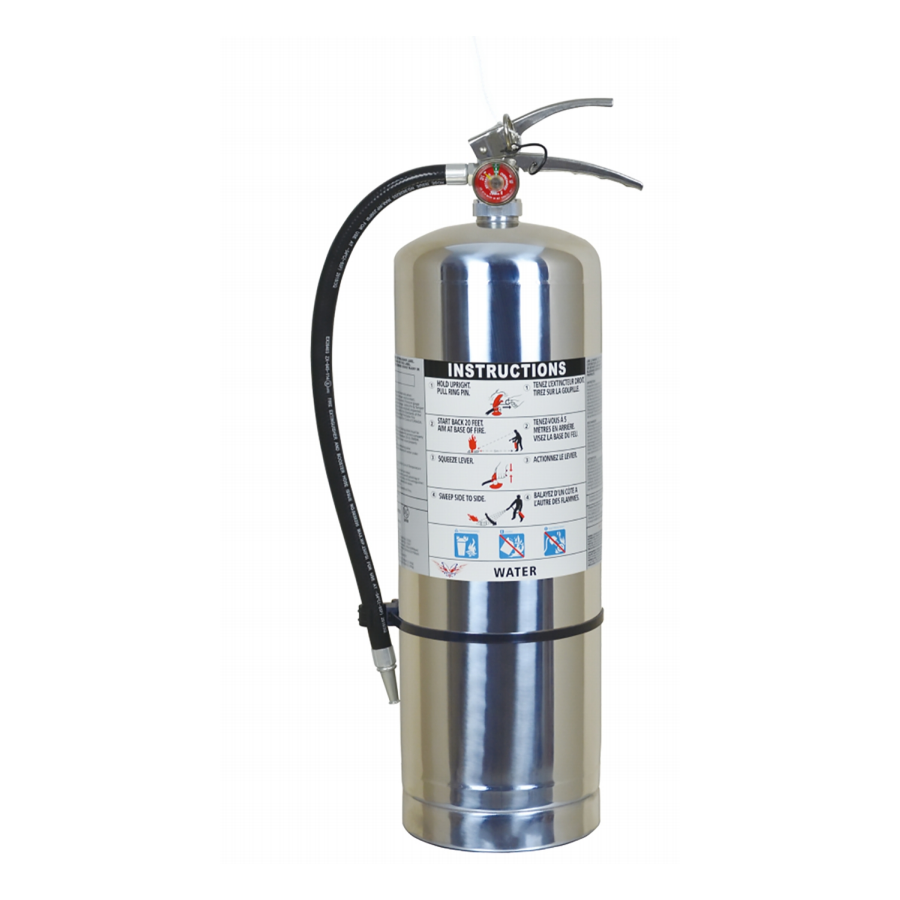
Industrial and commercial applications require strategic risk mapping. You must align your suppression tools with primary environmental risks. Certain industries benefit massively from water-based protection.
Let us examine the most practical deployment zones:
Warehousing & Logistics: Loading docks handle mountains of discarded cardboard daily. Cardboard baling areas process highly combustible dry waste continuously. Dry goods storage racks pose immense Class A fire risks. Water units provide excellent coverage here.
Manufacturing: Furniture assembly plants utilize vast amounts of raw wood. Paper mills process highly flammable dry pulp. Textile production floors generate dangerous airborne lint. These environments strictly require Class A suppression gear.
Educational & Healthcare: University dormitories contain numerous mattresses and bedding materials. Classrooms store extensive textbook collections. General administrative wings hold massive physical paper archives. Standard water serves these dry-goods areas perfectly.
Compliance dictates your spatial planning strictly. We look to established NFPA 10 and OSHA standards. These frameworks govern Class A hazard protection rigorously. Standard regulations mandate specific travel limits. Workers face a maximum travel distance of 75 feet. They must reach the nearest unit within this radius. Larger facilities require careful measurement. You must overlap coverage zones effectively. Proper spacing ensures rapid reaction times during early ignition phases.
We must conduct a practical cost-to-benefit analysis. Standard water units prove highly cost-effective to purchase initially. They cost significantly less than clean agent alternatives. Recharging them is extremely cheap after deployment. You only pay for compressed air and tap water. This financial efficiency matters for large buildings. They remain ideal for high-volume placement strategies. You can protect sprawling low-risk, dry-goods areas efficiently. They offer unmatched acquisition value.
You face extreme physical danger if you misuse these devices. Standard water units pose deadly risks outside their designated class. Operators must understand these critical limitations clearly.
Never deploy them on Class B flammable liquids. You must understand the hazard of physical displacement. Water is fundamentally heavier than oil or gasoline. The liquid stream will sink below the burning fuel immediately. It then boils and flashes into steam violently. This steam expansion throws burning oil everywhere. It violently spreads the liquid fire across the floor. You must keep them strictly out of automotive garages. Remove them from any chemical storage facilities entirely.
Class C electrical hazards present severe shock risks. Standard tap water conducts electricity incredibly well. A solid water stream connects the operator to the power source. The electrical current travels straight up the water column. This puts the user at immediate risk of lethal shock. You must keep them away from server rooms entirely. Never install them near heavy industrial machinery. Keep them distant from high-voltage electrical panels.
Class D and Class K fires create specialized nightmares. Combustible metals define Class D industrial hazards. Burning magnesium reaches extreme temperatures rapidly. Water causes massive reactive explosions upon contact with these metals. Class K involves commercial kitchen grease fires. A solid water stream violently disperses boiling grease. The water expands 1700 times its volume instantly. This violent expansion engulfs the entire kitchen space in flames.
Facility hazards rarely remain perfectly isolated. You often face mixed-risk environments. The industry developed specialized variants to solve this problem. We must evaluate three distinct options.
Standard Water represents the baseline choice. We use it strictly for pure Class A environments. It offers the lowest overall unit cost. It provides excellent suppression capacity. Most commercial cylinders hold 2.5 gallons of liquid. It utilizes a straight-stream nozzle for deep penetration.
De-ionized Water Mist offers distinct advantages. It uses highly purified, distilled water internally. It features a highly specialized spray nozzle. This creates a fine, non-conductive mist barrier. We evaluate it for mixed-hazard environments safely. You can deploy it in modern office spaces. Medical facilities use it near sensitive patient equipment. It handles minor electrical fires without electrocuting the user. It leaves absolutely no dry chemical residue behind.
AFFF defines Aqueous Film-Forming Foam technology. Manufacturers mix regular water with a chemical foam concentrate. This upgrades the unit significantly. It handles both Class A and Class B fires effectively. The foam solution spreads rapidly across liquid fuels. It creates a thick, suffocating vapor blanket. This seals the fuel surface completely. It traps flammable vapors and blocks oxygen access.
Variant Application Summary Chart | ||||
Extinguisher Variant | Core Agent Composition | Primary Fire Class Rating | Ideal Facility Environments | Key Limitation |
|---|---|---|---|---|
Standard Water | Pressurized Tap Water | Class A Only | Warehouses, Paper Mills, Archives | Highly conductive; spreads oil fires |
De-ionized Mist | Purified Water Mist | Class A & Class C | Hospitals, Server Rooms, Offices | More expensive; shorter spray range |
AFFF Foam | Water + Foam Concentrate | Class A & Class B | Garages, Fuel Storage, Runways | Conducts electricity; requires cleanup |
Physical deployment requires careful ergonomic planning. Standard units present significant physical handling challenges. A fully loaded 2.5-gallon standard Extinguisher is quite heavy. It weighs approximately 30 lbs in total. Wall mounts must bear this load securely. Flimsy drywall anchors will fail over time. You must consider operator capability strictly. Smaller staff members might struggle to lift it quickly. OSHA dictates specific mounting height requirements based on this weight.
Environmental risks demand your strict attention. Standard water units freeze solid in winter conditions. Freezing expands the internal water volume. This bursts the metal cylinder violently. You must address this in unheated environments. You need special anti-freeze charge additives. Technicians mix calcium chloride solutions into the cylinder. This protects them in unheated warehouses. Parking garages require winterized units constantly. Outdoor construction sites need protected equipment year-round.
Maintenance defines the operational inspection lifecycle. Recharging costs practically nothing. However, water units demand rigorous visual inspections. Technicians must check for dangerous internal corrosion. Water rusts unlined steel cylinders over time. Modern units use stainless steel to mitigate this. You must schedule standard 5-year hydrostatic testing. A specialist drains the cylinder completely. They pressurize it with water to test structural integrity. This proves the cylinder can hold pressure safely.
A standard water fire unit remains an incredibly powerful tool. It handles Class A ordinary combustibles with unmatched thermal efficiency. However, it becomes a severe liability if misapplied. Placing them near heavy electrical panels invites lethal shocks. Positioning them in chemical storage areas guarantees explosive disasters. You must respect the strict limitations of this equipment.
Take actionable steps to secure your facility today. Conduct a rigorous, localized hazard assessment immediately. Identify the primary fuel sources hiding in every room. Map out your electrical and liquid hazards clearly. We strongly advise consulting a certified fire protection specialist. Do this before finalizing any bulk procurement orders. Ensure your suppression tools match your actual risks perfectly.
A: Yes, you can use them for living areas containing wood or fabric. However, never use them in kitchens or garages. You risk deadly reactions from grease or electrical fires. An ABC dry chemical unit is generally preferred and much safer for general residential use.
A: A water unit is rated for Class A fires only. It leaves no toxic residue behind. An ABC unit covers multiple fire classes including liquids and electrical. However, it leaves a highly corrosive, difficult-to-clean powder that can damage sensitive electronics permanently.
A: A standard 2.5-gallon unit provides roughly 45 to 60 seconds of continuous discharge. You can maintain a safe distance during operation. The solid water stream offers an effective operational range of 30 to 40 feet.
A: The water inside does not expire. However, the pressurized cylinder degrades over time. Local fire codes mandate strict upkeep. The unit requires an annual visual inspection. It also needs a detailed internal examination and standard hydrostatic pressure testing every five years.


