
Views: 0 Author: Site Editor Publish Time: 2026-05-05 Origin: Site


Class F fires, which involve cooking oils or fats, are a significant concern in commercial kitchens, restaurants, and other food preparation areas. Unlike other types of fires, such as those caused by electrical equipment (Class C) or ordinary combustibles (Class A), Class F fires require specialized firefighting techniques due to the unique nature of cooking oils and fats. Wet chemical fire extinguishers are the most effective and essential tools for tackling these fires. In this blog, we will explore why wet chemical extinguishers are vital for Class F fires, how they work, and the benefits they offer to businesses in high-risk environments.
Class F fires involve cooking oils, fats, and grease. These fires can occur in commercial kitchens, deep fryers, and even at home during cooking processes. They are dangerous because of the high temperatures reached by cooking oils and the ability of the fire to spread quickly when oils flare up. Cooking oils and fats are often highly flammable, and in the case of deep-fat fryers, they can reach temperatures upwards of 200°C (392°F). When these oils catch fire, they create a volatile environment that can easily lead to widespread fire damage.
Class F fires are more challenging to handle than other fire types due to the nature of the fuel (cooking oils). Unlike other fires that can be easily managed with water-based extinguishers, oil fires can spread rapidly, causing significant harm. Water should never be used on grease fires, as it can cause the oil to splatter, spreading the fire.
Fires caused by cooking oils and fats can be incredibly dangerous and challenging to manage. The following reasons outline the importance of having proper fire protection for Class F fires:
When oil catches fire, it spreads rapidly. A small spark or hot oil splatter can quickly escalate into a full-blown fire, especially when there is a significant amount of oil involved in commercial cooking equipment.
The risk to human life in a Class F fire is significant. Without the proper fire extinguishing equipment, employees working in kitchens or food establishments can be exposed to life-threatening dangers. Additionally, the stress and panic during a fire can complicate emergency responses.
Oil fires, if not extinguished quickly, can result in severe damage to kitchens, cooking equipment, and the building itself. The fire can also spread to other parts of the building, causing more widespread destruction. Proper fire protection prevents the fire from escalating and helps to minimize property damage.
Traditional fire extinguishers, such as water-based extinguishers, are not designed for grease or oil fires. Using water on a grease fire can cause the fire to explode or spread rapidly, putting lives and property at greater risk. Wet chemical extinguishers are the only effective and safe solution for dealing with Class F fires.
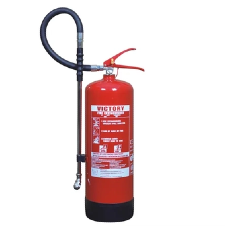
Wet chemical fire extinguishers are specifically designed to deal with Class F fires. These extinguishers contain a unique solution of potassium-based chemicals, which work by cooling the oil and smothering the flames. The wet chemical agent is effective in both quickly extinguishing the fire and preventing it from reigniting. This makes them a critical piece of fire protection equipment in kitchens, restaurants, and other food establishments where oil fires are a concern.
The working mechanism of a wet chemical fire extinguisher is both efficient and effective in dealing with cooking oil fires. Here’s a breakdown of how wet chemical extinguishers work to put out Class F fires:
When discharged, the wet chemical agent forms a thick, soapy foam layer over the burning oil. This foam cuts off the supply of oxygen to the fire, which is one of the key components needed for combustion. By suffocating the fire, the wet chemical extinguisher quickly halts the flames.
Wet chemical extinguishers do not just put out the flames—they also cool down the cooking oil. Cooking oils burn at extremely high temperatures, and this cooling effect prevents the oil from reaching its ignition temperature again, which is crucial for preventing re-ignition.
Wet chemical agents contain potassium-based compounds that react with the burning oil to form a soap-like substance called saponification. This reaction creates a protective layer that not only helps extinguish the fire but also makes the oil less likely to reignite. The saponification process also improves the effectiveness of the extinguisher, as it cools the oil and forms a barrier to oxygen.
Wet chemical extinguishers are safe to use around electrical equipment. Many commercial kitchens have a variety of electrical appliances, including deep fryers, ovens, and grills. Wet chemical extinguishers are non-conductive, meaning they can be safely used around electrical fires without the risk of electrical shock or short circuits.
Wet chemical extinguishers are specifically designed for Class F fires. The chemical formulation is engineered to address the unique characteristics of cooking oils and fats. Traditional extinguishers are ineffective or even dangerous for oil fires, making wet chemical extinguishers the best choice for this type of fire.
One of the biggest challenges with cooking oil fires is the potential for re-ignition. Even after the fire appears to be out, the hot oil can reignite if not cooled properly. Wet chemical extinguishers rapidly cool the oil and form a protective foam layer that prevents the fire from reigniting.
Commercial kitchens often have electrical appliances that are at risk during a fire. Wet chemical extinguishers are non-conductive, ensuring that they can be safely used around electrical equipment without the risk of electric shock or causing further damage.
The wet chemical extinguisher’s quick response time is essential in preventing the fire from spreading. In a commercial kitchen, where many cooking operations are happening simultaneously, fast action is necessary to minimize damage and prevent injuries.
Wet chemical extinguishers are designed to work in high-heat environments, such as those found in commercial kitchens. They can handle the extreme temperatures involved in oil fires, making them a reliable option for managing these dangerous fires.
In many jurisdictions, commercial kitchens are required to have appropriate fire protection equipment in place, especially for Class F fires. Wet chemical extinguishers are often a mandatory requirement in these environments, ensuring that businesses comply with fire safety regulations.
Benefit | Description |
Efficiency | Wet chemical extinguishers are highly effective in extinguishing Class F fires by cooling, smothering, and preventing re-ignition. |
Safety | These extinguishers are non-conductive, making them safe for use in environments with electrical appliances. |
Cost-Effective | Although the initial cost may be higher, their ability to prevent fire re-ignition and reduce damage makes them a worthwhile investment. |
Ease of Use | Wet chemical extinguishers are easy to operate, ensuring quick and effective action even by untrained individuals. |
Minimizes Property Damage | The extinguishers contain the fire before it spreads, minimizing damage to kitchen equipment and the building. |
To ensure that wet chemical extinguishers are ready for use when needed, regular maintenance and inspections are essential. Fire extinguishers should be inspected by a qualified professional at least once a year to ensure they are in good working condition. It’s also important to check the pressure gauge, ensure that the extinguisher is not expired, and replace it if it has been used or damaged.
Wet chemical fire extinguishers are essential tools for effectively handling Class F fires, which are common in kitchens and food-related businesses. Their specialized design allows for quick action, prevents re-ignition, and provides a safe solution for extinguishing cooking oil fires. Given their efficiency and life-saving capabilities, it’s essential for commercial kitchens and other high-risk environments to equip themselves with these extinguishers.
At NingBo ZhengXin Fire Fighting Equipment Co., Ltd., we provide high-quality fire safety products tailored for different fire classes, including wet chemical extinguishers. To ensure your business is well-equipped to handle any fire emergencies, reach out to us today for more information and to learn about our range of fire safety solutions.
Q: What are Class F fires?
A: Class F fires involve cooking oils, fats, and grease, typically found in kitchens and food-related environments. These fires require special fire extinguishing techniques due to the flammable nature of oils at high temperatures.
Q: Why can’t regular fire extinguishers be used for Class F fires?
A: Regular extinguishers like water or dry powder are not effective for oil fires and may even make them worse. Wet chemical extinguishers are specifically designed for Class F fires, as they cool the oil and prevent re-ignition.
Q: How do wet chemical extinguishers prevent re-ignition?
A: Wet chemical extinguishers rapidly cool down the burning oils and form a foam layer over the fire, which prevents it from reigniting.
Q: Are wet chemical extinguishers safe to use around electrical equipment?
A: Yes, wet chemical extinguishers are non-conductive and safe to use around electrical appliances and equipment typically found in kitchens.


