
Views: 0 Author: Site Editor Publish Time: 2026-07-17 Origin: Site


Protecting industrial facilities from fire presents a unique and demanding challenge. You must suppress Class A combustible materials and Class B flammable liquid fires quickly. You also need to avoid causing catastrophic collateral damage to sensitive facility equipment. Procurement and safety managers are actively re-evaluating their fire safety inventory today. Evolving environmental regulations, specifically global PFAS bans, mandate these urgent equipment upgrades. Stringent industrial safety compliance standards also demand highly reliable suppression tools across all sectors. This guide provides a practical, vendor-neutral framework for evaluating your available equipment options. You will learn how to properly shortlist and implement these essential safety units. We base our recommendations strictly on harsh operational realities and modern regulatory compliance requirements. This ensures your facility remains both fully protected and legally compliant at all times.
A 9L foam fire extinguisher provides the optimal balance of prolonged discharge time and manageable weight for industrial applications involving significant Class B hazards.
The regulatory phase-out of AFFF makes the transition to a 9L fluorine-free foam extinguisher mandatory for future-proofing facility compliance.
Selecting between stored pressure and an inside gas cartridge foam extinguisher dictates your long-term maintenance costs and reliability in harsh environments.
Procurement decisions must prioritize internal anti-corrosion lining quality, verified fire ratings, and third-party certifications (e.g., UL, EN3, NFPA compliance) over base unit cost.
Assessing facility risks requires accurate volume selection for your hazard zones. Is a nine-liter unit the correct choice for your specific industrial environment? A 9l foam fire extinguisher often serves as the industry standard for moderate to high-risk areas. We must look at core performance metrics to understand this preference.
Typical fire rating expectations for these units sit around 21A and 183B. These numbers directly correlate to maximum floor area coverage capabilities. A 183B rating indicates the unit can successfully extinguish 183 liters of burning flammable liquid. This provides substantial stopping power against hazardous industrial spills.
Operators face a harsh discharge reality during an emergency. These units typically offer 30 to 45 seconds of continuous discharge. This extended timeframe provides a critical buffer for safety operators. Smaller six-liter units empty too quickly during panic situations. This leaves inexperienced users vulnerable if they miss their initial target.
You must balance clear operational trade-offs here. These units deliver superior knockdown power on volatile flammable liquid pools. However, they carry a heavy gross weight of approximately 14 to 15 kilograms. User handling limitations become a real concern at this weight class. Facility managers should ensure staff can physically lift and operate them. Wheeled extinguishers offer more volume but lack this crucial quick mobility.
Capacity | Typical Discharge Time | Estimated Gross Weight | Best Application Scenario |
|---|---|---|---|
6 Liters | 15 - 20 Seconds | 9 - 10 kg | Small offices, light retail, confined spaces. |
9 Liters | 30 - 45 Seconds | 14 - 15 kg | Industrial floors, warehouses, manufacturing zones. |
50 Liters (Wheeled) | > 60 Seconds | 75 - 85 kg | Large fuel depots, aviation hangars, vast exterior yards. |
The data clearly positions the nine-liter model as the most versatile option. It provides maximum suppression capability before bridging into unmanageable wheeled territory.
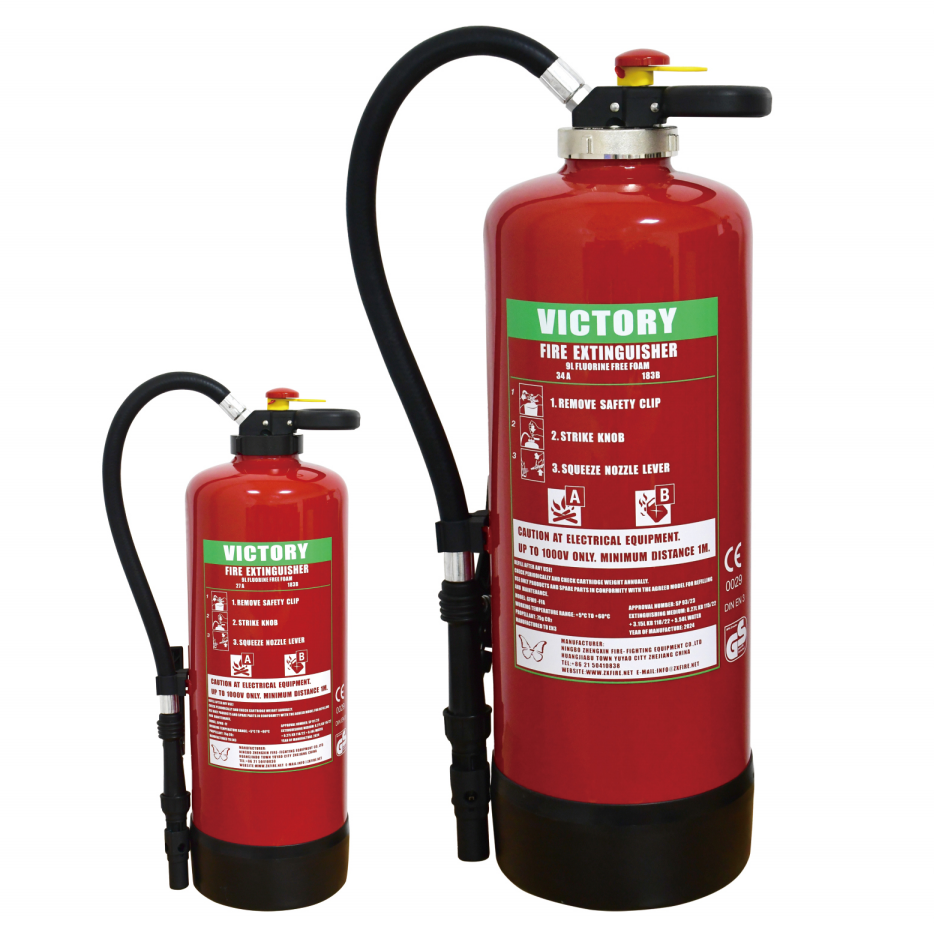
Buyers must compare the two primary mechanical designs available today. Each system categorizes how the cylinder stores its essential propellant gas. Understanding these differences ensures you select the right tool for your specific environment.
Stored pressure models represent the most common and recognizable market design. The liquid extinguishant and nitrogen propellant share the same internal cylinder space. This simpler design results in a significantly lower initial purchase cost. However, it requires regular pressure gauge checks by your maintenance staff.
These stored pressure models remain prone to gradual pressure loss. Fluctuating ambient temperatures can cause the internal nitrogen to expand or contract. This sometimes leads to slow leaks through the main valve assembly. A depressurized unit will fail immediately during an active fire emergency.
Alternatively, consider an inside gas cartridge foam extinguisher for demanding industrial applications. The propellant lives inside a separate, sealed internal cartridge. The main cylinder only contains the unpressurized liquid foam solution. The firing mechanism only pierces this internal cartridge upon direct user activation.
Implementation realities often justify the higher upfront cost of cartridge models. They perform significantly better in harsh industrial, marine, or high-vibration environments. High-vibration areas rarely degrade their internal pressure integrity. The protected cartridge remains completely isolated from external environmental stress.
Maintenance teams gain a massive operational advantage here. They can perform easier on-site inspections and liquid refilling procedures. Technicians simply open the top, inspect the liquid, and weigh the small cartridge. The process never requires external pressurization equipment or heavy nitrogen tanks. This dramatically streamlines your mandatory facility servicing schedules.
Security and compliance standards are shifting rapidly across the globe. Environmental agencies like the EPA and ECHA are aggressively banning PFAS chemicals. These "forever chemicals" previously formed the base of traditional Aqueous Film-Forming Foam (AFFF). Your facility must adapt to this global legislative shift immediately.
Performance verification remains a major hurdle for conservative procurement teams. Transparently comparing modern suppression mechanisms addresses this common industry skepticism. Traditional AFFF created a thin, chemical-heavy film over burning liquids. Modern fluorine-free foam (F3) relies on a slightly different application technique.
F3 creates a thick, robust bubble blanket to smother the fire. While highly effective, it requires a gentle application approach. Operators cannot rely on direct liquid plunging. They must bounce the foam off nearby walls or let it gently cascade over the spill. This requires minor adjustments to your standard safety protocols.
Upgrading to a 9L fluorine-free foam extinguisher ensures complete future-proofing for your facility. We strongly advise against purchasing any legacy AFFF units today. Disposal costs for PFAS-containing foams are escalating at an alarming rate globally. Environmental agencies treat discarded AFFF as highly hazardous waste.
Imminent regulatory deadlines will soon force premature replacement of older stock. Facilities holding onto AFFF will face massive disposal and replacement penalties. Transitioning early ensures full environmental compliance and avoids severe regulatory fines. It also protects local groundwater from toxic chemical contamination.
Procurement teams must evaluate structural components rigorously before making bulk purchases. Foam consists largely of water, creating severe internal rust risks for steel cylinders. Insist on hard evidence of high-grade internal polymeric or thermoplastic linings. These linings prevent cylinder corrosion and catastrophic pressure failure.
Valve and component durability dictate the long-term reliability of the unit. Look for heavy-duty forged brass valves and durable stainless steel handles. Avoid composite plastic components entirely when outfitting tough industrial applications. Plastic degrades rapidly under harsh UV exposure or heavy impacts.
You must carefully verify drop test results and pressure ratings. Check the manufacturer's burst pressure thresholds to ensure maximum safety. Always demand compliance documentation for localized safety standards.
Look for a European CE mark if operating within the EU.
Demand a BSI Kitemark for UK-based industrial compliance.
Insist on a verified UL listing for North American facilities.
Temperature limitations often dictate final placement locations across your facility. The standard operational range usually sits between +5°C and +60°C. Standard water-based mixtures will freeze and rupture the cylinder in cold weather. If your facility experiences freezing conditions, you must seek alternatives. Specialized anti-freeze variants or different suppression systems must be scoped.
Many buyers prioritize the cheapest base unit cost available. This approach often leads to frequent replacements and higher maintenance burdens. Cheap units often feature thin internal linings that fail within three years. They also use plastic valves that snap off during emergency deployment. Always prioritize robust build quality over marginal upfront savings.
Proper placement strategy prevents catastrophic delays during a sudden fire. Define optimal placement based entirely on hazard proximity and clear travel distances. Never place them directly inside the high-risk zone itself. Place them along the safe exit routes leading away from the hazard.
Ensure teams mount these heavy units on heavily reinforced wall brackets. Always install them at the ergonomically correct height for quick access. A fifteen-kilogram cylinder can cause severe injury if improperly secured. The carrying handle should sit roughly one meter from the floor.
Operator training remains a critical factor for successful deployment. Factor in the necessity of retraining your existing staff immediately. Teach them the standard PASS method for emergency response.
Pull the safety pin to break the tamper seal.
Aim the nozzle directly at the base of the fire.
Squeeze the operating lever to discharge the agent.
Sweep the nozzle smoothly from side to side.
Utilizing foam effectively on Class B fires requires deliberate sweeping motions. Operators must sweep the liquid to create a thick sealing blanket. They should never aim the nozzle directly into the burning liquid pool. Direct plunging splashes the burning fuel, spreading the fire further.
Establish strict servicing schedules to maintain operational readiness. Outline the ongoing commitment required for these essential safety devices. Perform basic visual inspections annually to check for visible exterior damage. Mandate thorough five-year discharge testing and internal cylinder evaluations. Factor in the logistical realities of safe ecological disposal for discharged liquids.
Choosing the right suppression tool involves balancing multiple critical factors simultaneously. It sits directly at the intersection of strict regulatory compliance and environmental suitability. You must carefully weigh the benefits of cartridge mechanisms against stored pressure models. Manufacturing quality directly impacts your facility's overall safety profile during an emergency.
Procurement teams should comprehensively audit their current Class B hazard zones today. Consult your insurance underwriters regarding mandatory fluorine-free transition timelines. Request detailed maintenance and end-of-life disposal cost breakdowns from all shortlisted vendors. This proactive approach guarantees safer operations, regulatory peace of mind, and robust fire protection.
A: Standard foam extinguishers are primarily for Class A and B fires. While some modern models pass a 35kV dielectric test (making accidental discharge near live equipment safer), they are not designed or recommended for Class C/E electrical fires.
A: Most units require a basic annual service. Extended maintenance, including a complete discharge, internal inspection, and refill, is typically mandated every 5 years, though harsh industrial environments may accelerate this timeline.
A: It has a higher initial purchase price, but long-term maintenance is often cheaper and faster for large industrial sites, as internal mechanisms are protected from the elements and on-site servicing requires fewer specialized pressurization tools.


