
Views: 0 Author: Site Editor Publish Time: 2026-07-19 Origin: Site


Flammable liquid fires escalate in mere seconds. They demand immediate and specialized suppression to prevent catastrophic facility damage. Deploying an incorrect agent accelerates the blaze. For instance, standard water spreads burning oil rapidly across floors. Meanwhile, dry powder creates severe visibility drops and hazardous cleanup conditions inside industrial settings.
Managing Class B risks requires an agent capable of sealing fuel surfaces and dropping temperatures fast. Facility managers face critical decisions balancing suppression power, operator safety, and emerging environmental mandates. The wrong choice leads to rapid fire spread or severe compliance failures.
We detail the suppression mechanics, capacity standards, and operational guidelines defining the commercial fuel and solvent safety landscape. You will learn why specific volume capacities dominate industrial environments. We also explore the ongoing industry shift toward modern chemical alternatives and outline critical deployment limitations.
Dual-Action Suppression: Foam extinguishes by creating a vapor-sealing blanket (smothering) while the water content reduces the temperature (cooling).
Optimal Capacity: A 9-liter unit provides the necessary discharge duration (typically 30+ seconds) and volume to tackle high-risk commercial spills.
Regulatory Shift: Buyers must now evaluate the transition to a fluorine-free foam solution extinguisher to comply with incoming environmental regulations (PFAS restrictions).
Strict Limitations: Foam is not suitable for pressurized gas fires (Class C) or deep-fat fryer fires (Class F), and requires specific dielectric testing validation if deployed near electrical risks.
Foam utilizes a highly sophisticated chemical process to neutralize flames. It does not merely push fire away. It systematically destroys the elements fueling the blaze. Understanding this process helps facility managers recognize why foam remains essential for chemical and fuel storage zones.
Combustible liquids do not burn directly. The vapors releasing from their surfaces ignite. Foam solution rapidly spreads across the surface of unignited and burning liquids alike. It creates an aqueous film. This dense blanket physically separates the liquid fuel from the surrounding oxygen. Oxygen starvation immediately suffocates the flames. Furthermore, the resilient blanket traps flammable vapors underneath. It prevents new vapors from escaping and finding an ignition source.
A high-quality foam mixture consists primarily of water. This heavy water content provides a massive tactical advantage. It absorbs immense amounts of heat from the surrounding environment. It also strips heat directly from the fuel source. Dropping the fuel temperature below its flashpoint guarantees the fire cannot sustain itself. The combination of smothering and cooling delivers rapid, reliable knockdown power.
Dry powder acts fast. It knocks down roaring flames almost instantly by interrupting the chemical chain reaction. However, powder provides absolutely no cooling effect. It also fails to secure the volatile fuel surface. Once the powder cloud settles, hot metal or remaining embers easily re-ignite the exposed fuel vapors. This phenomenon is called flashback. Flashback poses a lethal threat to operators. Foam prevents flashback entirely. Its durable blanket remains intact long after the initial discharge, securing the hazard area safely.
Common Mistakes:
Assuming dry powder secures a liquid spill permanently.
Walking through a deployed foam blanket, which breaks the vapor seal and invites flashback.
Applying foam directly into the center of a deep liquid pool, causing burning fuel to splash.
Fire safety hardware must match the potential hazard scale. Small units work well for office paper fires. Industrial liquid spills demand robust volume. The standard 9l foam fire extinguisher reigns supreme across commercial sectors for several practical reasons. It balances raw suppression power with physical usability.
European standards dictate strict fire test ratings. A typical 9-liter unit carries a rating of 21A 183B. The "183B" designation represents a specific, standardized test fire. Under controlled laboratory conditions, a trained operator can extinguish a 183-liter flammable liquid tray fire using this exact unit. This metric proves the immense capability packed into a single cylinder. Facility risk assessors rely on these ratings to calculate required floor coverage accurately.
Operator safety relies heavily on standoff distance. Burning liquids radiate intense, blinding heat. A 9-liter unit offers an extended discharge time. Operators usually get 30 to 45 seconds of continuous flow. Furthermore, the nozzle design propels the agent across a throw range of 4 to 5 meters. You can combat the blaze from a safe perimeter. Smaller capacities empty too quickly. They force operators to move dangerously close to the heat source.
Facility managers consistently specify 9-liter units for loading bays, chemical storage areas, and generator rooms. You might wonder why they avoid multiple smaller units. The answer lies in uninterrupted application flow.
Continuous Sealing: Building a strong vapor blanket requires continuous, unbroken application.
Reduced Operator Fatigue: Switching between multiple 2-liter units breaks the seal and wastes precious seconds.
Standardized Training: Employees only need to master one size and weight class during safety drills.
A single large unit guarantees the volume necessary to tackle high-risk commercial spills without pausing.
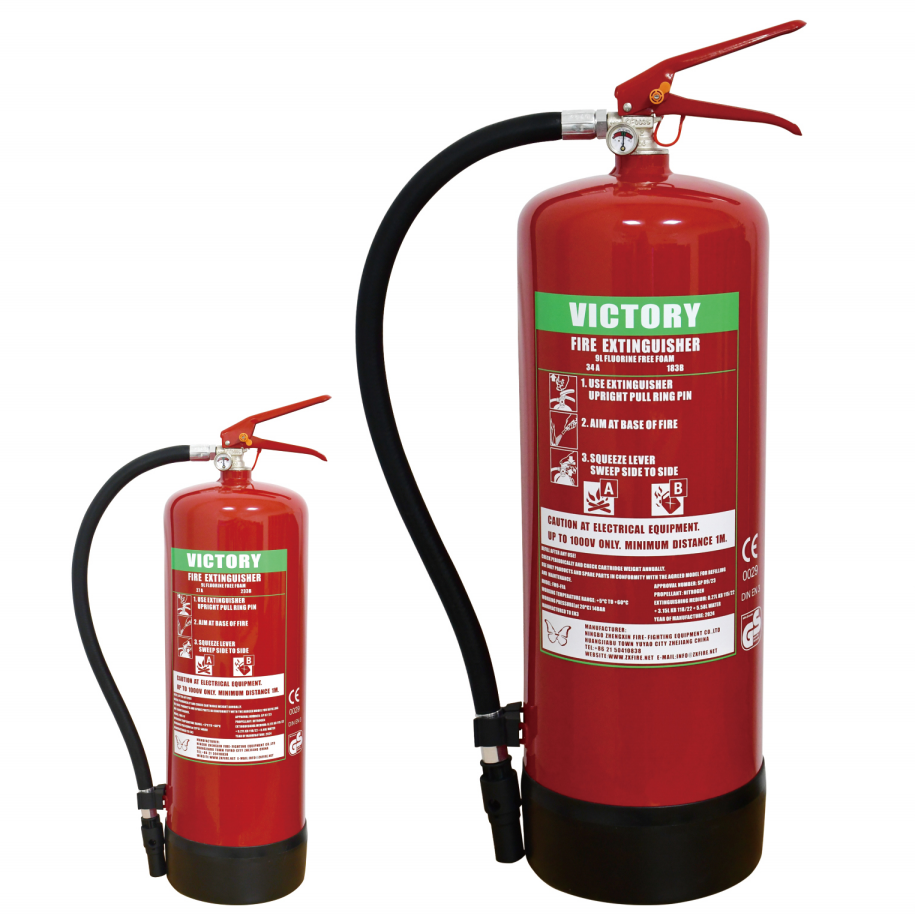
The fire protection industry is undergoing a massive transformation. Legacy chemicals face strict bans globally. Facility managers must adapt their procurement strategies immediately to maintain compliance. Environmental agencies now target the exact compounds that made older foams so effective.
Aqueous Film-Forming Foam (AFFF) dominated the market for decades. It utilized Per- and Polyfluoroalkyl Substances (PFAS). These "forever chemicals" drop surface tension rapidly. Unfortunately, they demonstrate extreme environmental persistence. They accumulate in groundwater and exhibit severe toxicity. Consequently, incoming environmental regulations mandate a complete phase-out of PFAS-based suppression agents. Buying legacy stock now creates future disposal and compliance headaches.
Modern alternatives eliminate these toxic compounds. However, implementing a fluorine-free foam solution extinguisher requires operational adjustments. Legacy AFFF was forgiving. You could spray it almost anywhere, and it would form a film. Fluorine-free foams often demand a "gentle" application technique.
Operators must bounce the discharge off a nearby vertical surface. They let the foam flow gently down onto the liquid pool. Directly splashing the liquid disrupts the surface and impedes blanket formation. Training protocols must update to reflect this changing application reality.
Evaluation of Modern Alternatives vs. Legacy Solutions
Feature | Legacy AFFF | Fluorine-Free Foam (F3) |
|---|---|---|
Chemical Base | Contains PFAS compounds | 100% free of forever chemicals |
Environmental Impact | High persistence, toxic runoff | Biodegradable, safer runoff |
Application Method | Forgiving, direct application possible | Requires gentle, indirect application |
Regulatory Status | Facing strict global bans | Fully compliant with new mandates |
Buyers must update shortlisting criteria. You cannot simply swap units blindly. Verify current fire ratings on all new models. Ensure the proposed units achieve the necessary Class B ratings without relying on restricted chemical compounds. Ask suppliers for exact chemical datasheets. Plan your transition timeline before regulatory deadlines force emergency replacements.
A fire extinguisher operates under intense internal pressure. It sits idle for years but must perform flawlessly in seconds. Build quality determines reliability. Inferior components lead to catastrophic failures, leaks, or sudden depressurization. You must recognize the hallmarks of a properly manufactured unit.
You must locate specific mandatory markings before purchase. An authentic EN 9L foam extinguisher will prominently display several independent approval logos. Look for the EN3 approval stamp. It confirms rigorous European testing. Check for CE or UKCA marks denoting strict manufacturing compliance. The BSI Kitemark provides an additional layer of third-party quality assurance. Absence of these marks signals a counterfeit or substandard product.
External aesthetics hide internal engineering. Foam solutions consist mostly of water. Water causes raw steel to oxidize rapidly. Unlined steel cylinders will corrode from the inside out. This internal rust weakens the vessel walls. It also clogs the discharge nozzle with debris. High-quality units utilize thick polyethylene internal linings. This plastic barrier separates the corrosive water mixture from the steel shell. It prevents catastrophic structural failure during operation.
Emergencies induce severe panic. Fast visual identification saves lives. Industry standards like BS 5306 and NFPA 10 dictate strict color-coding rules. A compliant unit features a Signal Red body. It carries a distinct Cream or Pale Yellow color panel above the operating instructions. This universal language ensures anyone can instantly distinguish it from water (solid red) or dry powder (blue panel) units.
Best Practices for Inspection:
Verify the pressure gauge needle sits firmly in the green zone.
Check the tamper seal and safety pin monthly.
Inspect the discharge hose for cracks or UV degradation.
Owning the right equipment solves only half the problem. Poor placement renders the best hardware useless. Furthermore, deploying foam in the wrong scenario introduces severe new hazards. Strategic implementation requires careful planning and strict adherence to safety guidelines.
You must locate units adjacent to high-risk zones. Target areas like commercial garages, paint spray booths, and indoor fuel stores. However, avoid placing them directly inside the spill path. If a fire blocks access to the cylinder, the operator remains defenseless. Mount them along designated escape routes. Position the carrying handle approximately one meter off the floor to facilitate rapid, ergonomic lifting.
Foam excels at specific tasks but fails dangerously at others. You must understand its limitations to avoid disastrous operational errors.
Electrical Risks: Many modern units pass a 35kV dielectric conductivity test. This rating means accidental spray on live equipment will not electrocute the user. The nozzle design breaks the continuous water stream. However, they are absolutely not designed for primary use on electrical fires. The high water content causes severe, irreversible damage to server racks and circuit boards. Use CO2 for dedicated electrical hazards.
Class F (Cooking Oils): Never deploy this agent on commercial deep fat fryers. Kitchen oil burns at extremely high temperatures. The water inside the foam instantly turns to steam upon contact. This expansion creates a violent explosion of burning oil. You must specify Wet Chemical units for all commercial kitchen environments.
Neglected equipment fails. Facility managers must implement rigorous maintenance schedules. Conduct visual inspections every single month. Check gauges, hoses, and pins. Hire certified technicians for the mandatory annual basic service. Finally, standard codes dictate an extended service typically every five years. This involves a complete discharge, internal vessel inspection, and fresh chemical refill. Tracking these cycles guarantees operational readiness.
Evaluating fire safety equipment requires a clear understanding of your specific environmental hazards. A 9-liter foam unit represents the optimal balance of raw suppression power, extended safety standoff distance, and manageable post-fire cleanup for commercial flammable liquid risks. It creates an unbeatable vapor seal that stops flashback dead in its tracks.
As you move forward, prioritize these action-oriented next steps:
Conduct a comprehensive site fire risk assessment to calculate your exact volume and placement requirements based on fuel load.
Audit your current inventory to identify any aging legacy AFFF units.
Consult your suppliers immediately regarding their specific timeline for fluorine-free stock transition.
Update your employee training protocols to include the "gentle application" technique required for modern chemical alternatives.
A: Yes. It is highly effective on solid combustibles like wood, paper, and textiles. The high water content within the mixture penetrates the materials and provides excellent cooling, quickly dropping the temperature below the ignition point.
A: The internal solution typically lasts 5 years. Standard maintenance codes dictate a mandatory extended service at this interval. The unit must undergo a complete discharge, internal inspection, and fresh chemical refill to guarantee operational integrity.
A: Cleanup requires specific hazardous waste disposal protocols. It depends heavily on whether the agent is legacy AFFF or modern fluorine-free. You cannot simply wash it into standard municipal drainage systems. Always utilize professional environmental cleanup services.
A: Yes. Because it is primarily water-based, the solution will freeze. Standard units must be kept in environments above freezing, typically +5°C. For outdoor winter deployment, you must specify units containing a specialized anti-freeze formulation.


